The Elfstedentocht is the biggest ice-skating tour in the world. It’s held in the province of Friesland in the north of the Netherlands, and it’s a circular route 200 km long, passing through all eleven historical cities of the province. It used to be held every whenever the ice was more than 15 cm thick, on average every 2 – 3 years. But it’s only been held 3 times since 1963.
The journal Nature reports “The Arctic has warmed nearly four times faster than the globe since 1979”
The NOAA says about the US east coast “…high-tide flooding is now 300% to 900% more frequent than it was 50 years ago”
Time Magazine reports that “it’s about 260% more probable” that Atlantic hurricanes are more dangerous than they were 40 years ago.
The World Resources Institute reports that “Forest fires are becoming more widespread, burning nearly twice as much tree cover today as they did 20 years ago.”
And here’s a scary map of where the worst of the warming is:
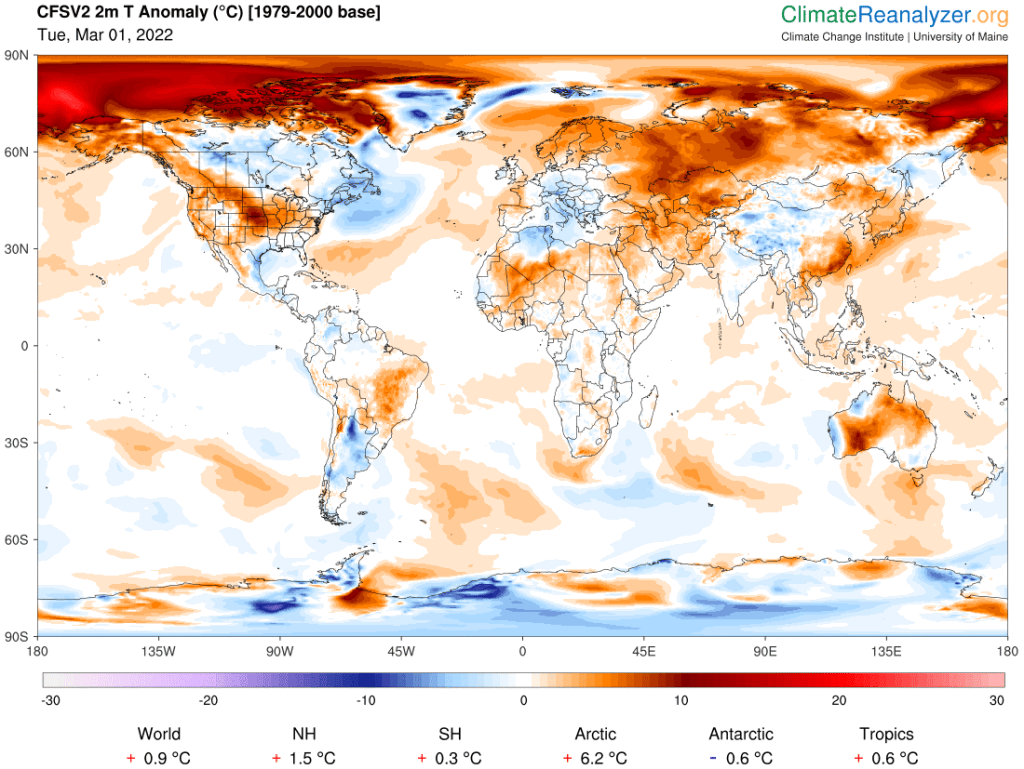
…scary that the worst of the warming is where 8 million cubic miles of freshwater iceis currently stored!
Climate change is real, and we should be concerned.
We may argue over whether the current trends are due to human action, but climate change is happening now.
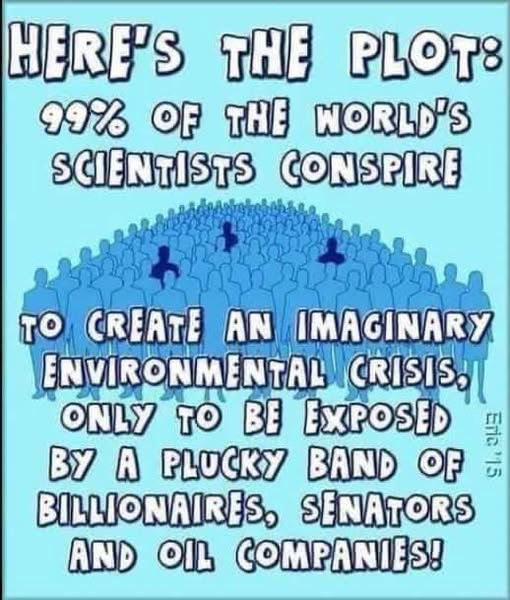
There has been something like 400 scientific studies into Anthropogenic Global Warming (AGW), and 97% have concluded that it is: a) real, b) the result of human activity, and c) Needs our urgent attention. More recently, during 2013 and 2014, only 4 of 69,406 authors of peer-reviewed articles on global warming… (ie. 0.0058%), rejected AGW. Thus, the consensus on AGW among publishing scientists is above 99.99%, verging on unanimity.
The hydrocarbons that we’re so dependent on for our modern lifestyles, are effectively the results of 200 million years of carbon capture. Yet it’s taken us little over 200 years to consume virtually all of these hydrocarbons, and release the captured carbon as CO2, so it seems self-evident to me that this would have an impact on the atmosphere, and therefore the climate.
So on one hand you have a better than 99% consensus amongst scientists who really understand the subject, that climate change is a) real, b) man-made, and c) needs our urgent attention.
On the other hand, you have business interests who feel challenged by any attempts to curtail CO2 production, so they got together and created a major campaign of denial, disinformation and obfuscation. Don’t believe me? Checkout this article:
“Dark Money” Funds Climate Change Denial Effort
TL:DR… it’s an article in Scientific American which found “140 foundations funnelled $558 million to almost 100 climate denial organizations…”. The result is a lot of people have been persuaded that AGW is a conspiracy theory.
In 2017, US president Donald Trump was persuaded to pull the USA out of the Paris Accord on Climate Change. This decision came at the urging of 22 Republican senators in a letter to the White House dated May 25, 2017. Records show that between them, those Republicans received nearly $32 million in campaign contributions from the energy sector and $18 million from the oil and gas industry.
The consequence is a considerable body of ant-AGW opinion, especially in America, of people with no climate science qualifications, who’ve been swayed by the lies and disinformation put out by these measures.
Ironically, you don’t hear these people pronouncing on gene therapy or quantum chromodynamics, but because they’ve heard the rhetoric, because they’ve experienced weather, and because they’ve heard a little about the coming and going of Ice-Ages, they think they know enough about climate-change to conclude that it’s all a myth.
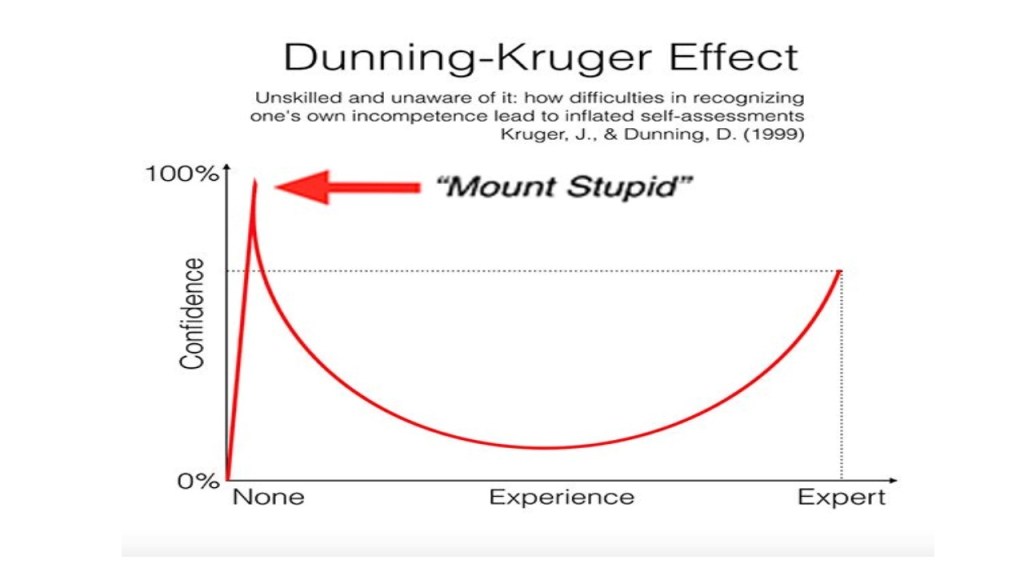
They are down at the ‘noisy but ignorant’ end of the Dunning Kruger graph. I imagine that they are the same sort of people who believe in flat-Earth, UFOs, Chemtrails and conspiracy theories; ie. just another belief system.
Sadly, many lay people misunderstand that when scientists call something a scientific theory, it’s because, like Evolution and the origin of the Cosmos, despite the mass of scientific evidence, some things are ultimately unprovable – they can only ever be a theory. The amount of research and experiment done over the years means that a scientific theory is about as close as you can get to fact, but sadly, too many people make the huge mistake of thinking that because it’s only a theory, their opinion is as valid as the scientist who’s made it their life’s work.
Let’s make no bones about it, despite the staggering weight of evidence and research, Anthropogenic Global Warming is still science’s ‘best guess’; and as long as it’s predicting a future based on an incomplete picture of climate in the past, it can never be conclusive.
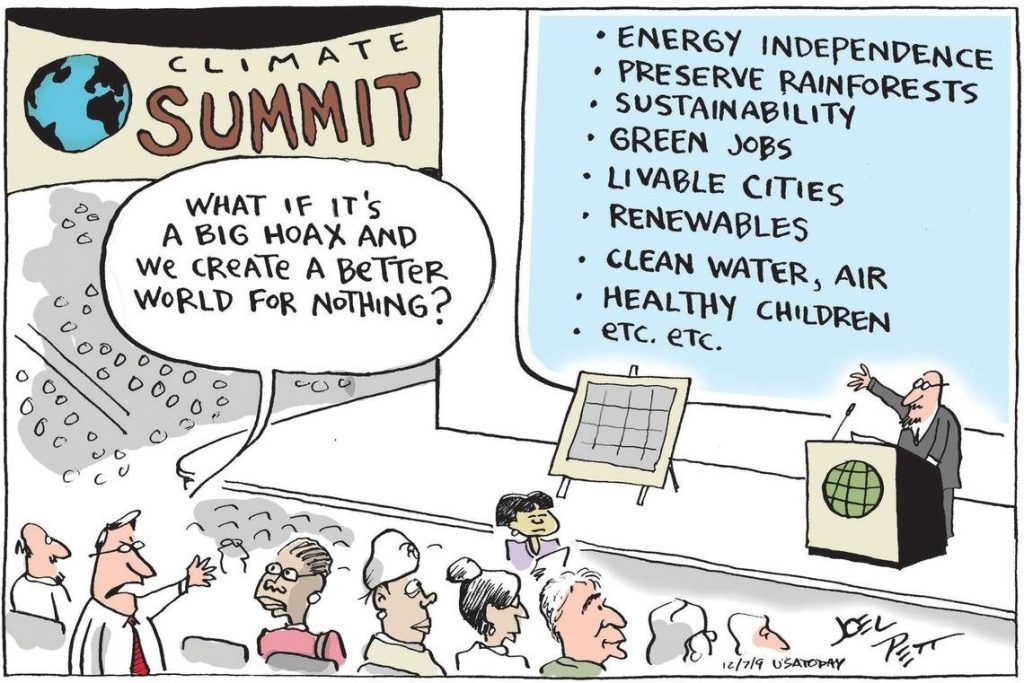
BUT… even accepting that there is a small but finite possibility that the theory may be wrong, the future of the planet, and therefore the human race is potentially at stake. This may be our one chance of avoiding global disaster, so we’d be insane if we didn’t take it.
And consider that it’s only a couple of decades since the time that tobacco companies were saying things like “There is no link between tobacco smoking and lung cancer”; and oil companies were denying the connection between lead in petrol, and various health issues including brain damage in children.
Ask yourself who would you rather believe; the lobbying might of these mega-companies, or the independent scientists who conducted independent studies?
I have a friend who was climate change sceptic… unsurprising really, as he’s a senior geologist for a major European oil company. Then one day, he decided to check out the data, and took an opportunity to attend a seminar on Climate Change. It was a ‘Road to Damascus’ moment for him, and he was an instant convert. He stayed in the industry but became influential in moving the company towards CO2 Sequestration, whereby the company now ‘locks-up’ CO2 in proportion to the petroleum that they produce, so that they as a company are now Carbon-neutral.
I later asked him what changed his mind, and he said that the data was so persuasive that scientists in almost any other field would give their right arm for such compelling data. His biggest regret was the length of time it had taken him to reverse his views.

