Even after more than 150 years, Evolution is still one of the more misunderstood scientific theories. The big question is why?
Charles Darwin was the first to get his theories published with “On the Origin of Species” in 1859, but others were coming to similar conclusions about the same time, based on their own observations; most notably a contemporary and sometime collaborator of Darwin’s called Alfred Russell Wallace.
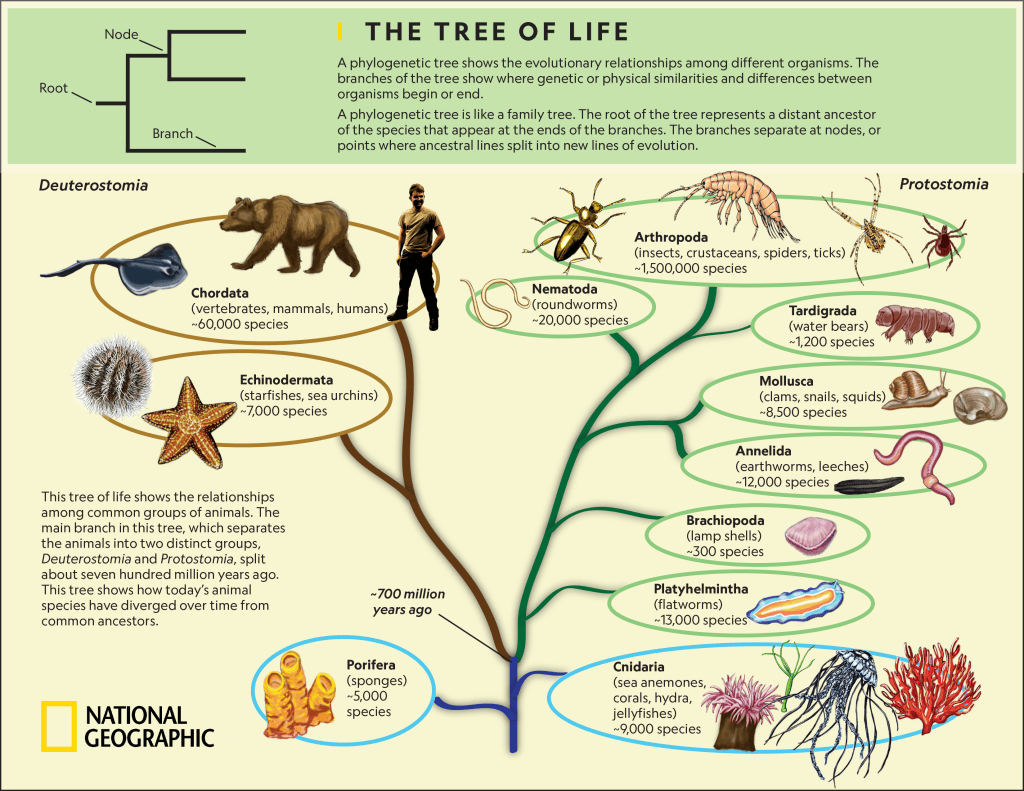
There is nothing really contentious in the Theory of Evolution to anyone thinking about the subject rationally. It states that successive generations of organic life (be they animal, vegetable, fungal, microbial, etc.) may contain random mutations. These mutations may confer a slight advantage which may increase the likelihood of the organism reaching maturity and passing these traits to the offspring. Over time, the accumulation of these traits may even result in new species.
Organisms with mutations that confer a disadvantage would soon die out.
These inherited advantages may become more important at times of environmental pressures, such as climate change and other natural disasters.
So an organism which is more successful at producing offspring that can survive long enough to reproduce, will out reproduce something which is less successful. It’s a tautology, similar to saying 1 = 1. It’s trivially true and can’t be false.
Consider this scenario. When I first visited Spain more than 50 years ago, mosquitoes were a problem, but I remember how easy they were to spot on white hotel room walls. Now, retired and living in Spain, I observe (perhaps anecdotally) that they are harder to spot. They are still a nuisance, but when I realise they are in the room and put the light on, they are no longer obvious.
So imagine that over decades, people like me have been squishing only the ones that can be seen, and the ones more predisposed to land on darker surfaces are more likely to survive to have offspring. In time they are more likely mate with others similarly predisposed, and over the generations could become the dominant version… you see where I’m going with this?
Evolution is real.
Anyone who can be bothered to look will find a staggering amount of evidence from the fossil record. We also see it (as Darwin did) where plants and land-based birds and animals on islands separated by a few miles of sea, have diverged from common ancestors, to take advantage of subtly different ecologies. We see it in places like Madagascar and Australia, where they’ve been separated from the rest of the world for geological epochs and evolved totally unique flora and fauna.
We’ve even seen evolution in human time-scales. Examples include antibiotic resistant bugs, African elephants with smaller tusks, and there’s something called industrial melanism, where during the industrial revolution, the soot-darkened environment caused a darkening of pigmentation in moths, birds and other animals, making them better camouflaged.
And humans have used selective breeding for millennia to create animals such as cattle, dogs and horses with special, desirable characteristics, so it’s really not much of a reach to understand that this also happens in nature… just a little slower because the changes are random.
And to dispel another misconception, I remember a science teacher asked by one of the class how he thinks humans might look like in (say) a million years and the teacher, obviously out of his depth, said something like “perhaps we’ll have lost things we don’t need such as our little fingers and bodily hair”.
Unfortunately, evolution doesn’t work that way; nor does it mean that humans could one day evolve to include things like wings, wheels, third arms, or nifty little cutting gadgets. Evolution is about inheriting traits that improve chances of survival to breeding age… nothing more.
It’s interesting to note that human evolution has been suspended for something like 4,000 years, when we became reasonably well adapted to our environment. Ignoring illness, accident, disability and personal inclination, we were able to breed pretty well whenever we wanted to, and in doing so, pass our genes to the next generation.
In fact human fecundity is now one of the biggest problems we face, as the world population means increased competition for resources such as energy, water, crops, minerals, sea life, etc. In addition, our tendency to assume the atmosphere, the seas and the earth have an infinite capacity to absorb our waste products, means we are slowly poisoning the planet.
We are heading inexorably towards any number of possible man-made disasters, so the next stage in human evolution may well be due to environmental pressures that we ourselves have created.
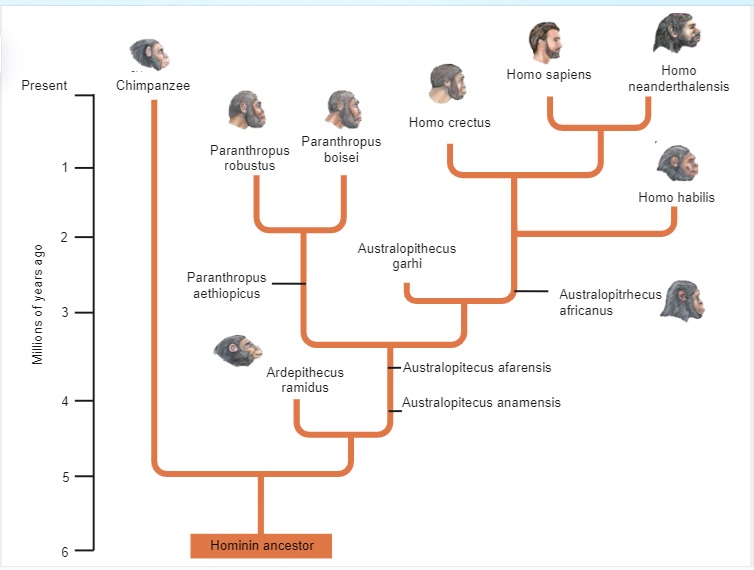
The Theory of Evolution is rational, self evident and with copious amounts of evidence, has a sound scientific basis. And yet Evolution seems to be a problem for some people, especially fundamentalist Christians, who choose a literal interpretation of the Book of Genesis. Which brings me to…
Creationism 101
Religious fundamentalists put their faith in a book where there’s no consensus how much of it is based on real events. In fact there’s a general acceptance that a lot of the Old Testament is based on legends handed down from generation to generation, that like Chinese Whispers, probably lost something in the telling. For example there’s no historical or archaeological basis for stories of the Exodus, Noah’s flood, or the battle of Jericho. Indeed it’s more than likely that the Old Testament is little more than a collection of stories supporting the Jewish creation myth.
It tells us that people who shave their temples, wear garments made of more than one type of fabric, or plant two different crops in the same field, should be stoned to death. It’s a little more relaxed on family matters and suggests that it’s OK to sleep with your daughters, as well as selling them into slavery.
The Bible was clearly written for a different time; I accept that it is still a huge influence on modern society, but like most great books, it is best used for guidance rather than blind obedience.
As Mark Twain noted, “The Bible… is full of interest. It has noble poetry in it; and some clever fables; and some blood-drenched history; and some good morals; and a wealth of obscenity; and upwards of a thousand lies.”
It’s also important to realise that the majority of Christians have no problem with evolution, nor any other scientific explanations of what they see as God’s work. To them, the statements “the sky is blue because God made it so”, and “the sky is blue because light of shorter wavelengths are scattered by the atmosphere” are not incompatible… just different ways of thinking about things.
Let’s not forget that some of the greatest science has been done by theists, including Galileo, Darwin, Newton, Faraday, Maxwell, J J Thompson, Heisenberg as well as the great Islamic scholars like Ibn Sina, Al-Farabi and Al-Biruni.
We also know that intellectuals within organised religion believe in science and the scientific method. The Catholic Church for example, acknowledges the validity of the current cosmological model, as well as established science such as the theory of evolution.
Judging by the questions I read on Quora, it’s clear that most of the people who oppose Evolution, do so because they’ve never taken the time to understand it. Questions like…
- “If evolution is true, how come we’ve never observed a monkey turning into a human?”.
- “Attention Atheists, why do you believe in ‘evolution’ when there is no evidence for it? Have you seen ANYTHING evolve before your eyes?”
- “If evolution is true, how come there are no flying mammals”
- “With the revelation that DNA now proves humans are not related to any other mammals on earth, why is the ‘Theory of Evolution’ still presented in educational books as a plausible reality?”
- “Evolution is at best a hypothesis, and is NOT a scientific theory since it has no evidence. Why is evolution dishonesty being taught as if it has been proven?”
- “If evolution wasn’t false, how do evolutionists explain that there are no non-carbon based living organisms? Is it possible that this is just a coincidence? “
- “How are atheists so entitled to their own beliefs its so funny because yall think that every life form in the universe was created by accident. yall believe that we evolved from fish and stuff how do u people believe that?”
If Evolution is misunderstood, the fundamentalist church leaders must take a lot of the blame. They knowingly misrepresent the subject, and the gullibility and scientific naivety of their followers serves their church well, as they help spread their misconceptions as well as their scepticism.
It’s interesting how the fundamentalist Christians find themselves marginalised on science and Evolution, and yet are somehow influential enough that several southern US states either ban the teaching of it, or disingenuously insist that the Old Testament version be given equal scientific footing under the heading Creationism. It’s still common to see things like this in US school textbooks.
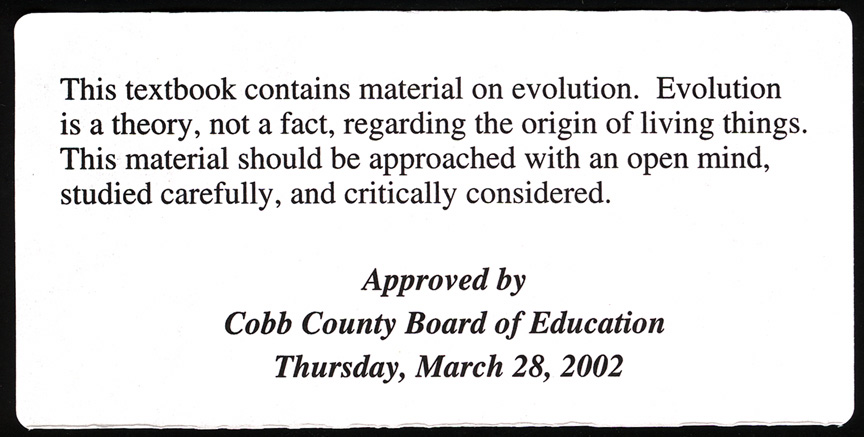
A quick word on their use of the word ‘theory’. Wikipedia says…
“A scientific theory is a well-substantiated explanation of some aspect of the natural world that is acquired through the scientific method and repeatedly tested and confirmed, preferably using a written, pre-defined, protocol of observations and experiments. Scientific theories are the most reliable, rigorous, and comprehensive form of scientific knowledge.”
To all intents and purposes, a scientific theory, especially one as mature as Evolution should be considered by the lay public as a fact.
Creationism is based on a collection of myths and legends and meets none of the above criteria, so cannot be considered to be a scientific theory. The claim that Creationism is a science and should be taught as such, is wrong and by knowingly perpetuating this lie, Christian fundamentalists lost the moral high ground a long time ago.
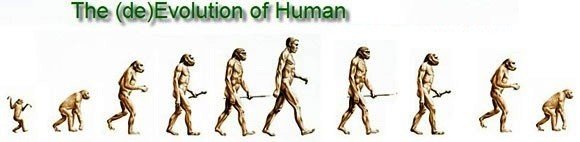
And you know what is really ironic? By ignoring the evidence of our eyes and our ability to reason, the Fundamentalist religions are taking small steps on the road to de-evolution… they’d be happy to see an end to the age of enlightenment, and a return to ignorance and superstition. Their aims are also a form of hubris; in rejecting logic and reason, they are ‘second-guessing’ the intentions of their God, who after all gave us enquiring minds, and may well be disappointed with these narrow-minded ‘Christians’.

