Space exploration
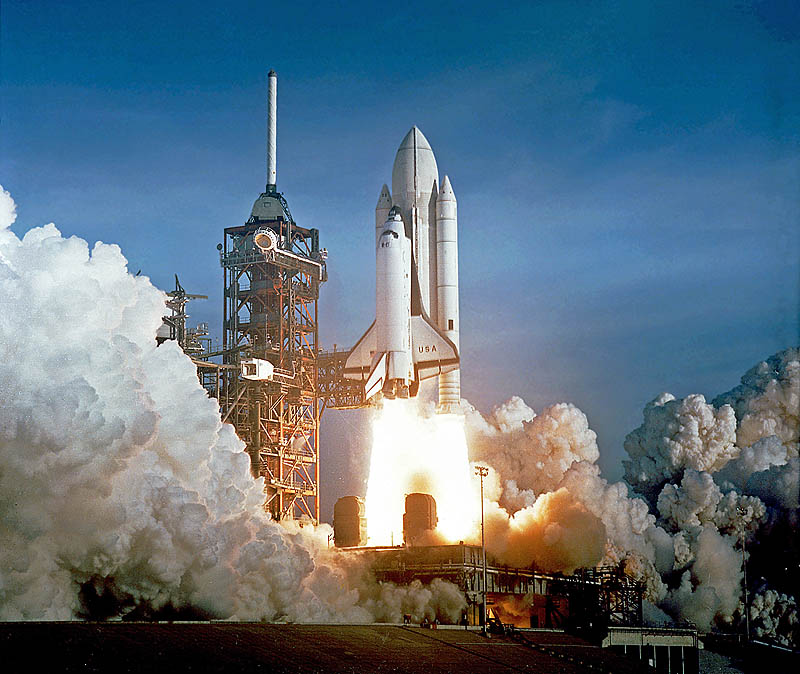
The first shuttle launch: Columbia at the start of mission STS-1. This image is based on the NASA original, but cleaned up and enhanced for printing. 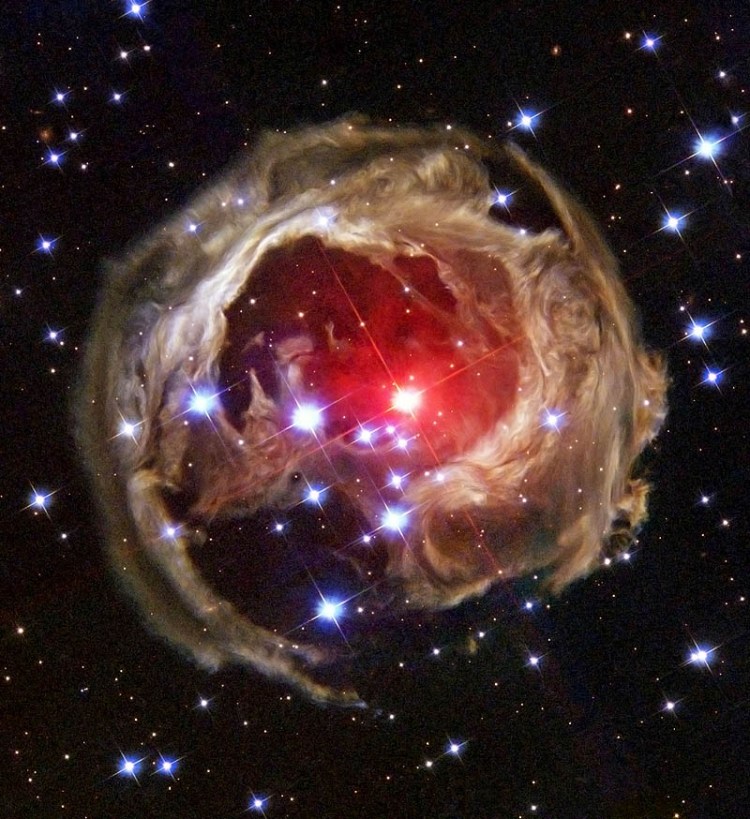
A Hubble image of an expanding halo of light around the star V838 in Monocerus. Thanks to NASA and the Hubbel heretage team (STScI/AURA) for the use of this image. 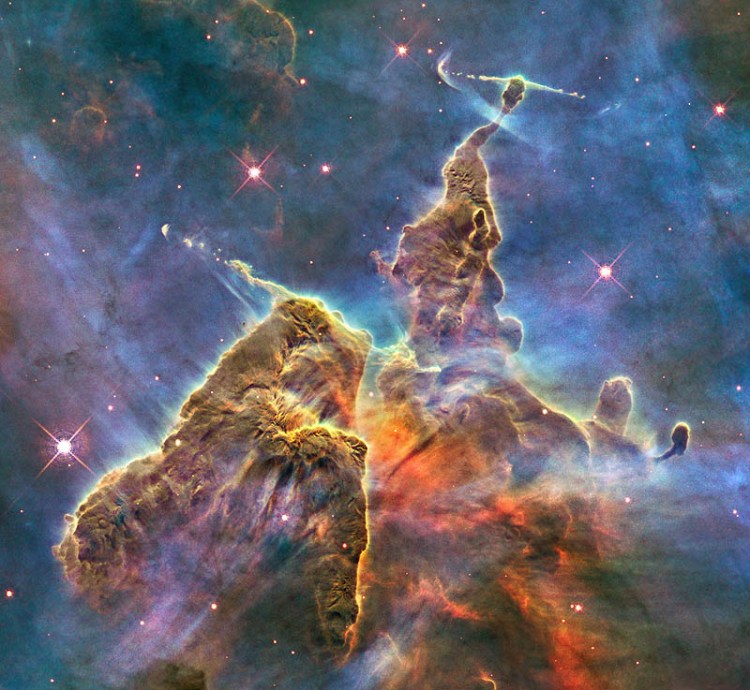
Detail of the Carina Nebula (NGC 3372) where stars are forming out of clouds of gas and dust. Thanks to NASA, STScI and Hubble for the use of this image. 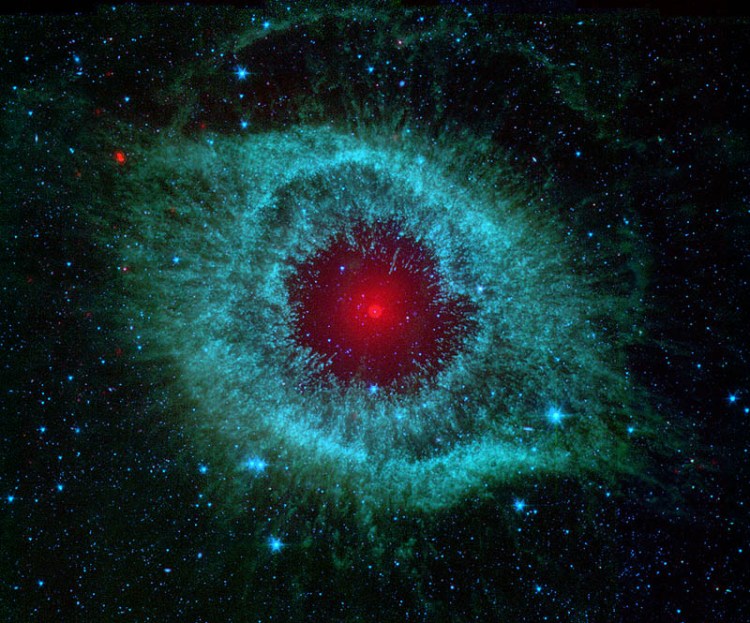
An infra-red view of the Helix Nebula, from the Spitzer Space Telescope 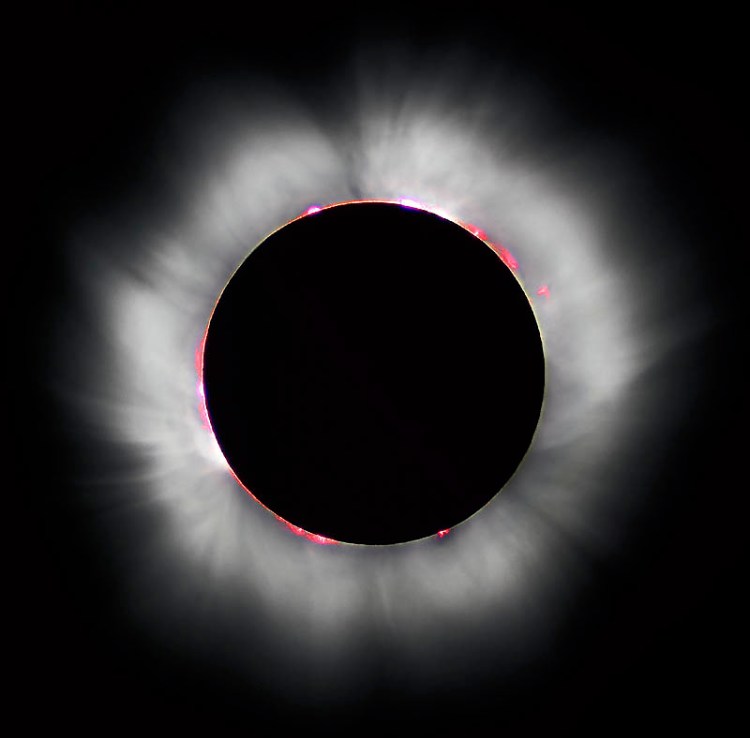
The solar eclipse of August 11, 1999 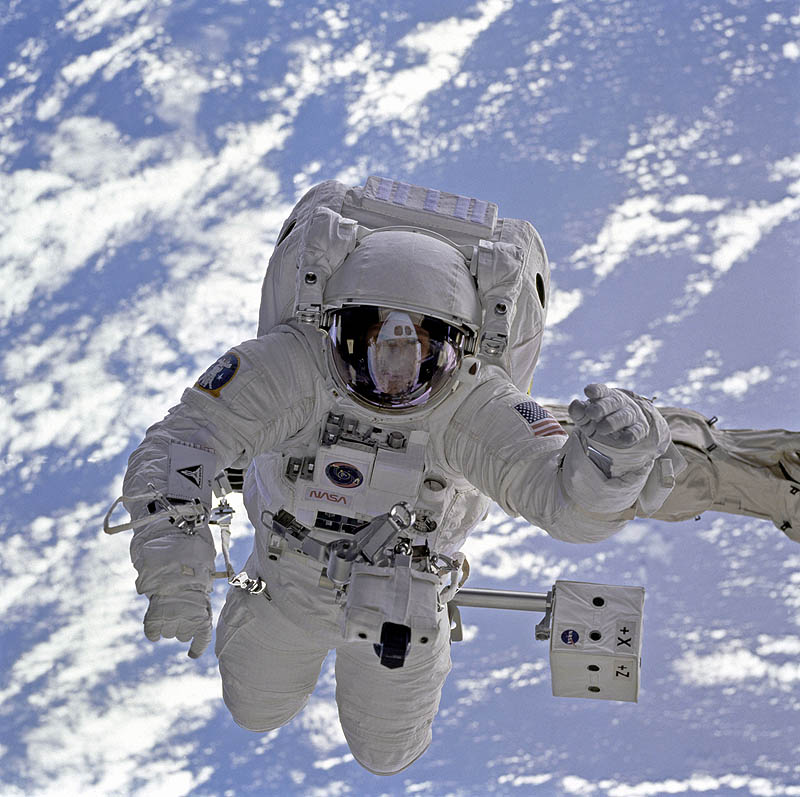
The pale blue Earth serves as a backdrop for astronaut Michael Gernhardt, who is attached to the Shuttle Endeavour’s robot arm during a spacewalk on the STS-69 mission in 1995. This image is based on the NASA original, but cleaned up and enhanced for printing. 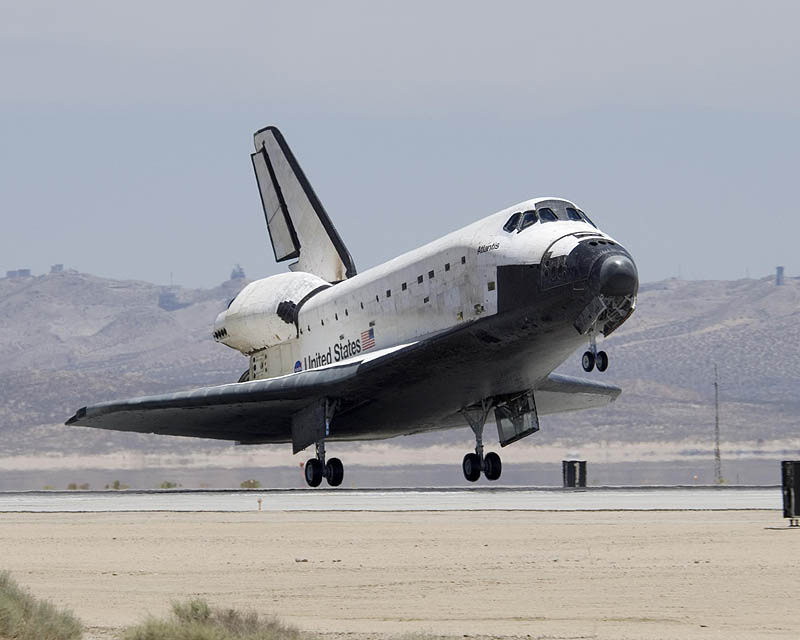
STS-66 Atlantis landing at Edwards air base in California 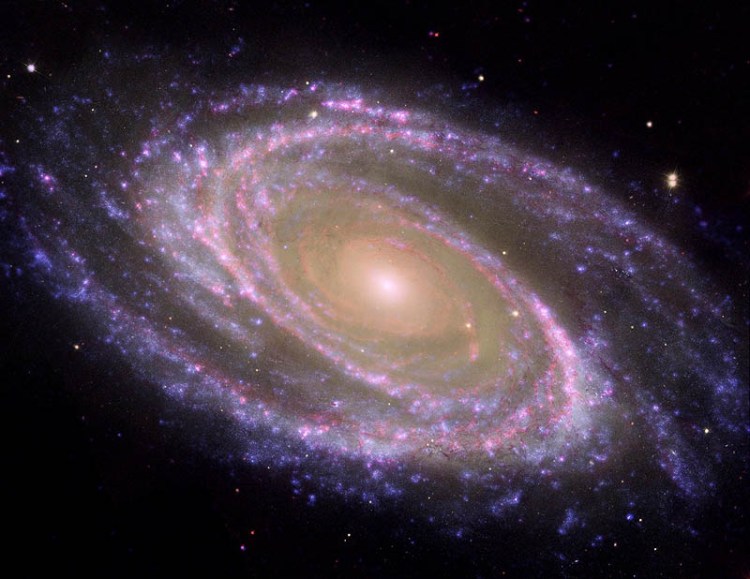
A composite image from the Spitzer and Hubble Space Telescopes, of the spiral galaxy M81. 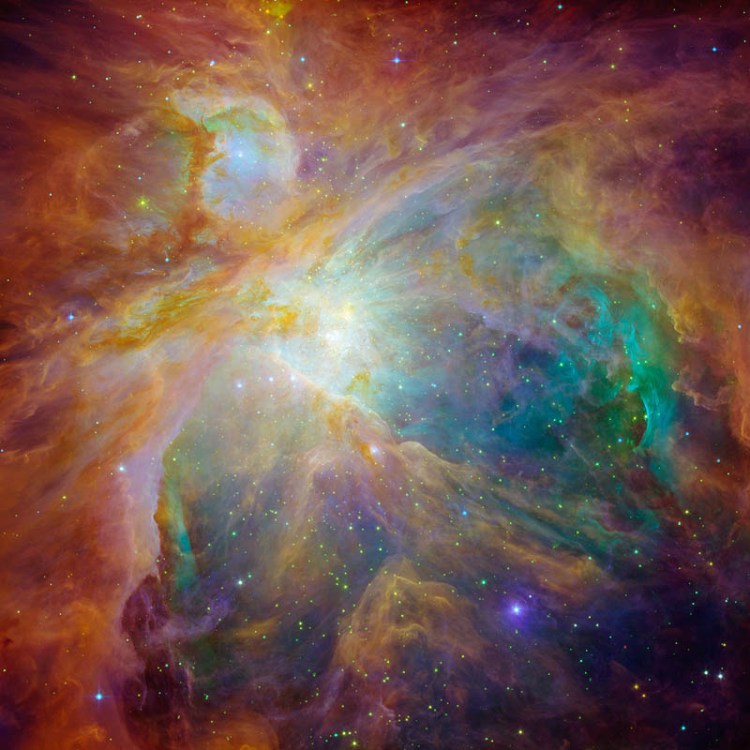
A composite image of the Orion Nebula from the Hubble and Spitzer Space Telescopes. 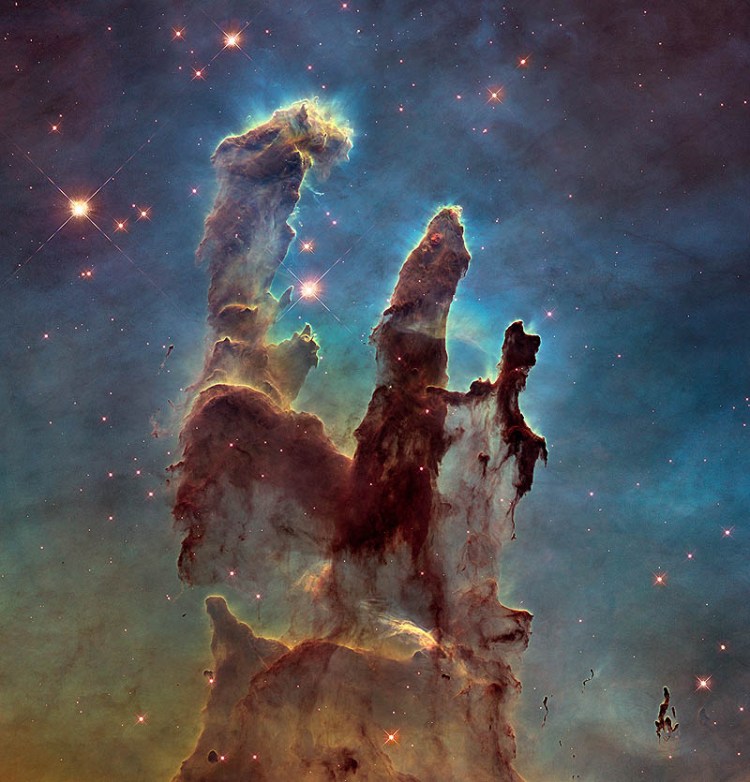
NASA’s Hubble Space Telescope has revisited the famous Pillars of Creation, revealing a sharper and wider view of the structures in this visible-light image. Astronomers combined several Hubble exposures to assemble the wider view. The towering pillars are about 5 light-years tall. The dark, finger-like feature at bottom right may be a smaller version of the giant pillars. The new image was taken with Hubble’s versatile and sharp-eyed Wide Field Camera 3. The pillars are bathed in the blistering ultraviolet light from a grouping of young, massive stars located off the top of the image. Streamers of gas can be seen bleeding off the pillars as the intense radiation heats and evaporates it into space. Denser regions of the pillars are shadowing material beneath them from the powerful radiation. Stars are being born deep inside the pillars, which are made of cold hydrogen gas laced with dust. The pillars are part of a small region of the Eagle Nebula, a vast star-forming region 6,500 light-years from Earth. The colors in the image highlight emission from several chemical elements. Oxygen emission is blue, sulfur is orange, and hydrogen and nitrogen are green. Object Names: M16, Eagle Nebula, NGC 6611 Image Type: Astronomical Credit: NASA, ESA, and the Hubble Heritage Team (STScI/AURA) 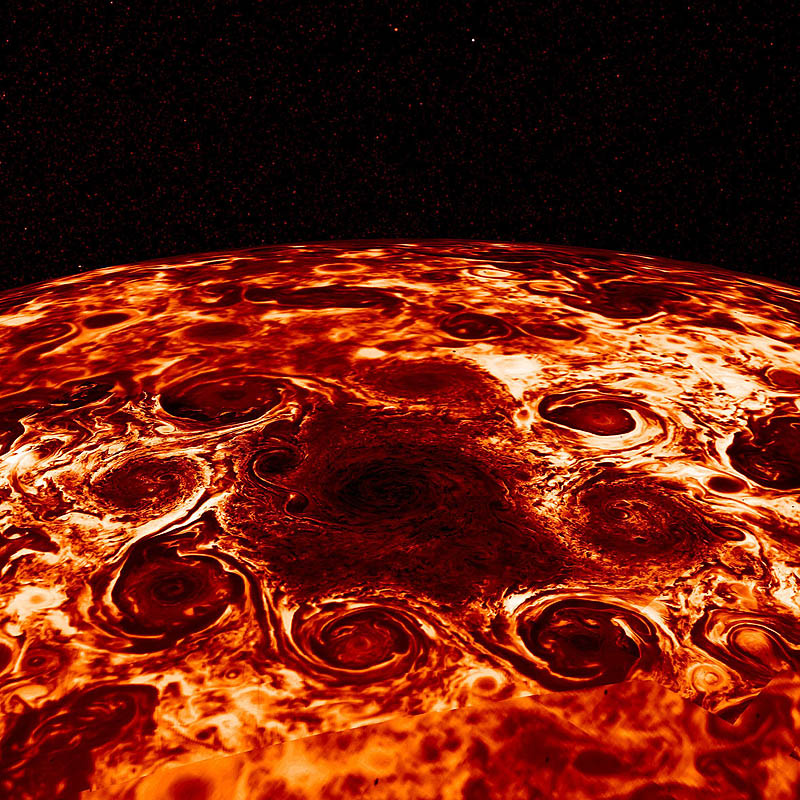
Cyclones on Jupiter 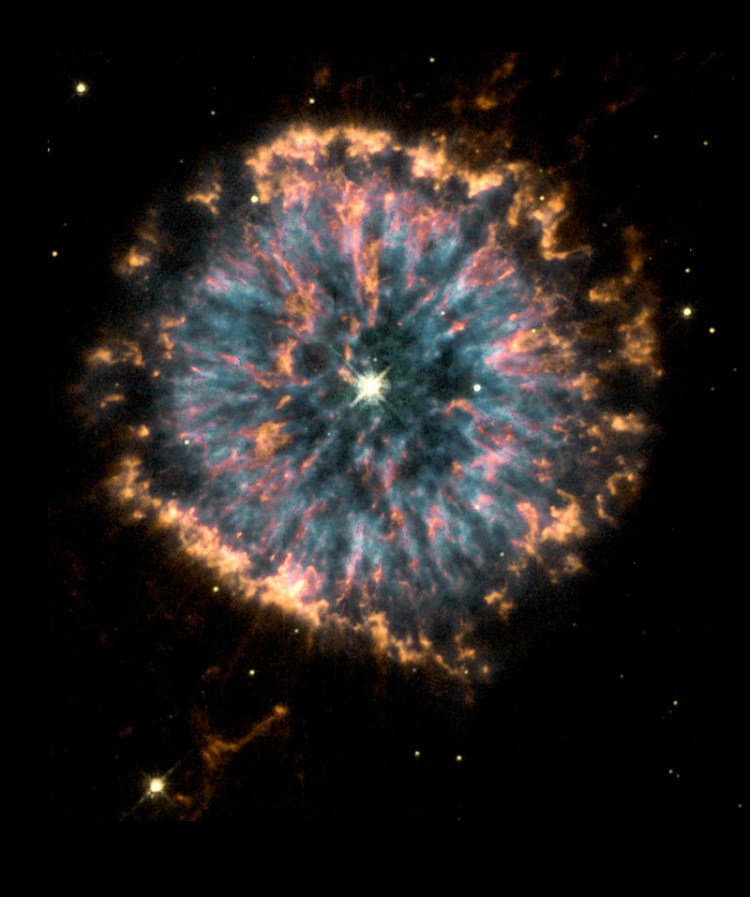
The glowing eye of Planetary Nebula in the constellation of Aquila. Thanks to NASA, STScI and Hubble for the use of this image. 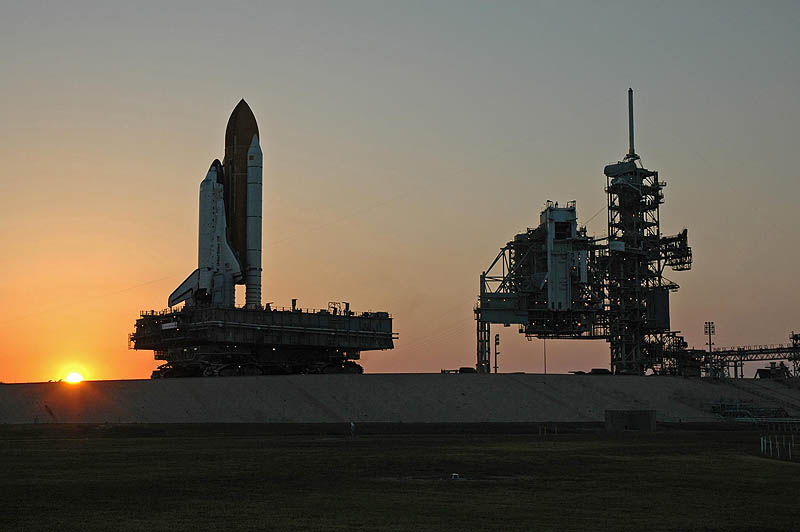
An early morning shot of the space shuttle Discovery rolling towards it’s launch pad. This image is based on the NASA original, but cleaned up and enhanced for printing. 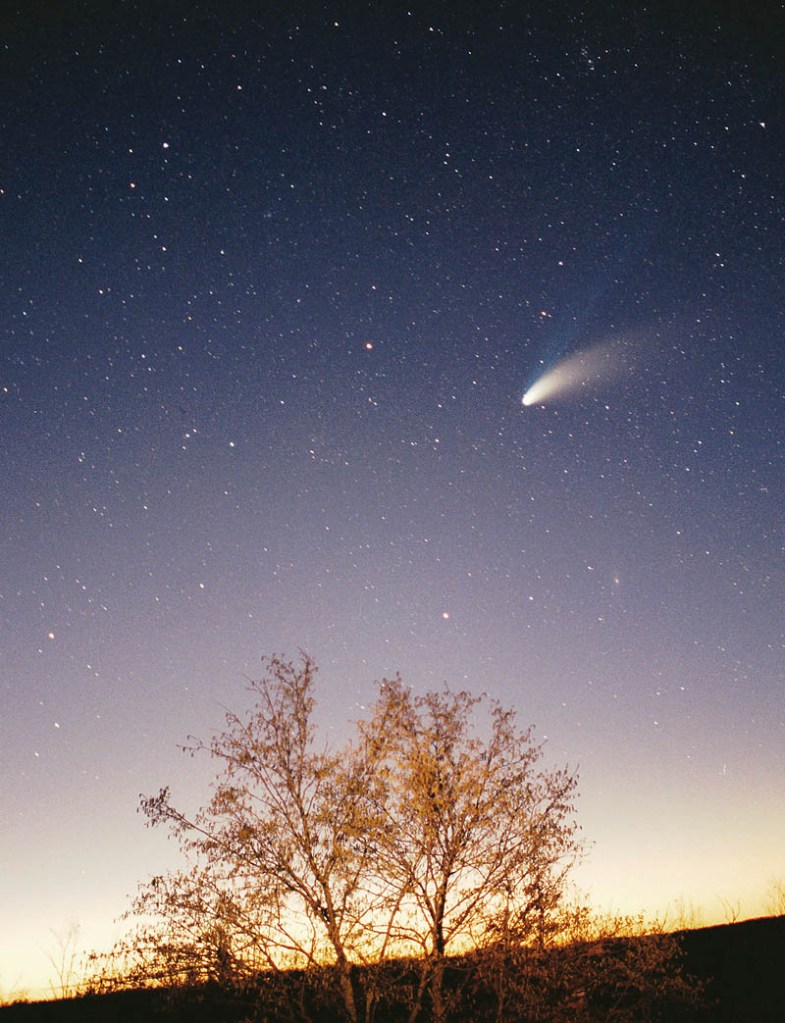
Comet Hale-Bopp 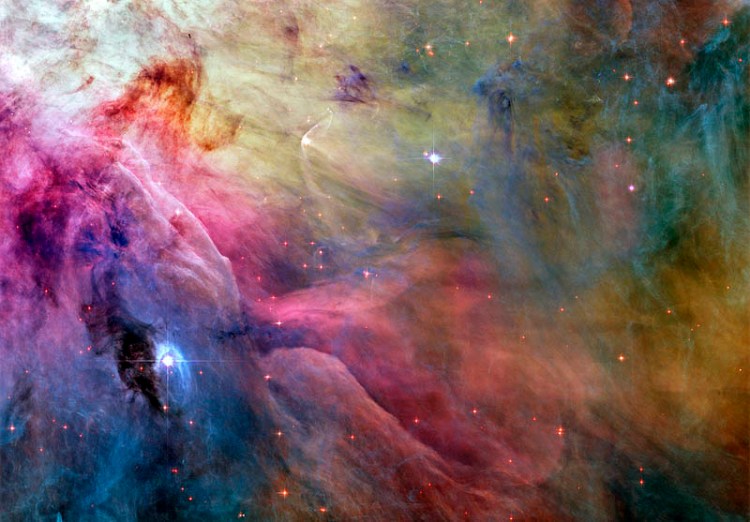
A Hubble image of part of the Orion Nebula 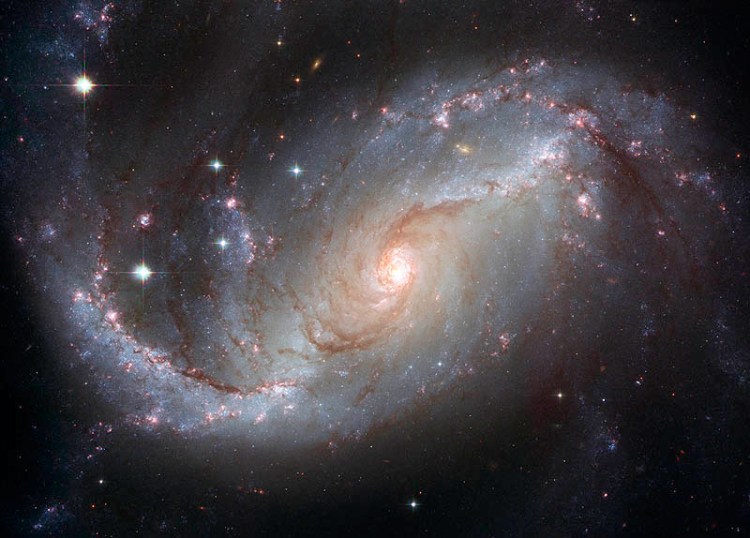
A Hubble image of Galaxy NGC 1672 in the constellation Dorado. 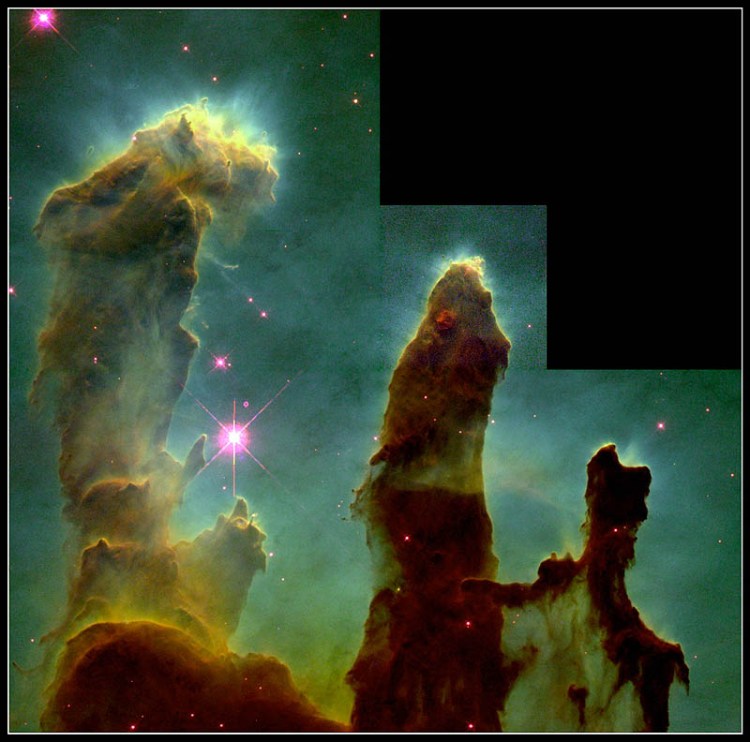
A Hubble image of EGGs (Evaporating Gaseous Globules) in the Eagle Nebula 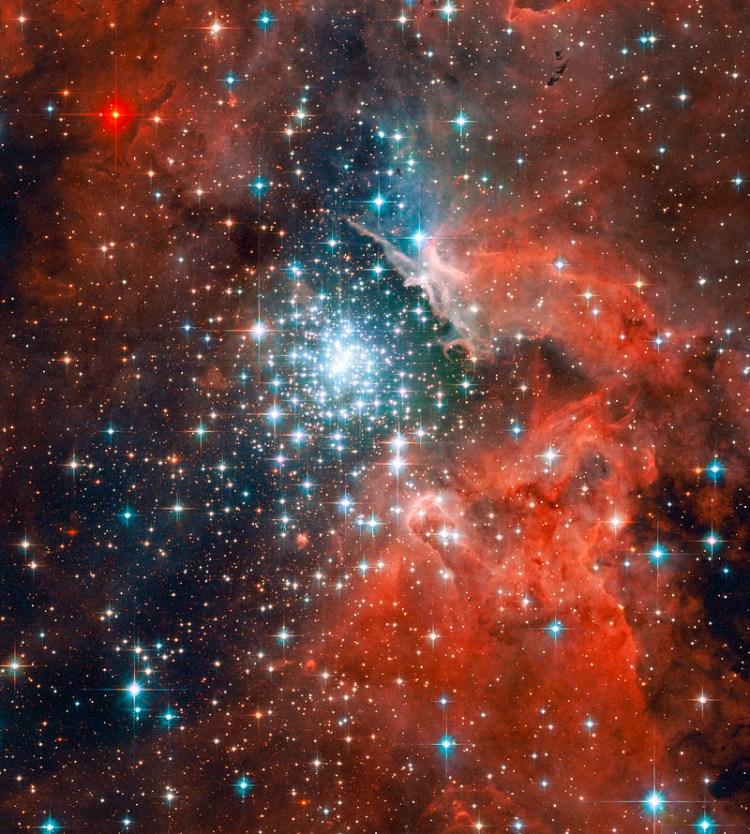
This picture of the nebula NGC 3603 shows globules of gas and dust; giant, gaseous pillars; young stars surrounded by debris disks; aging, massive stars; and a blue supergiant star. all various stages in star life. Thanks to NASA, STScI and Hubble for the use of this image. 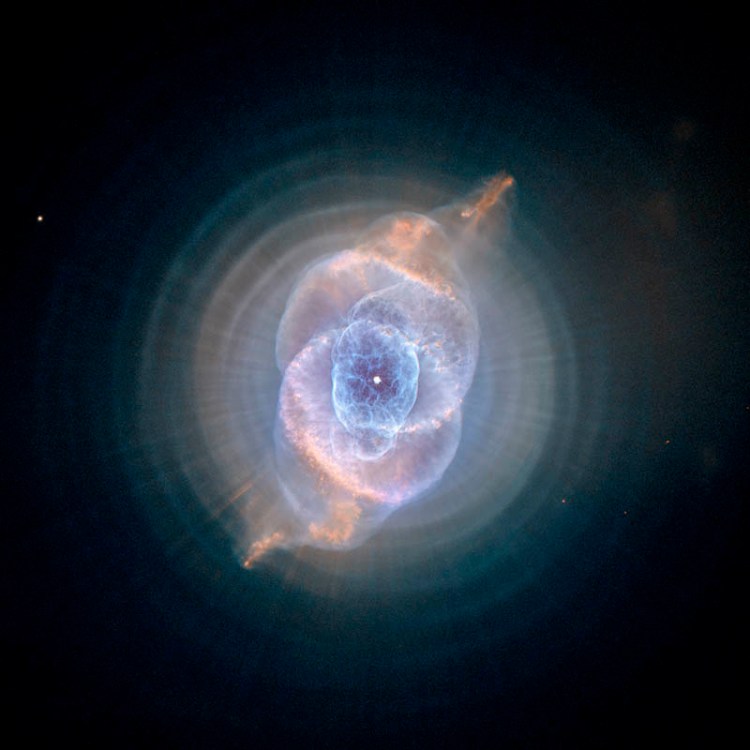
A false colour Hubble image of the Cat’s Eye Nebula, processed to reveal the concentric rings around the inner core. Thanks to NASA, STScI and Hubble for the use of this image. 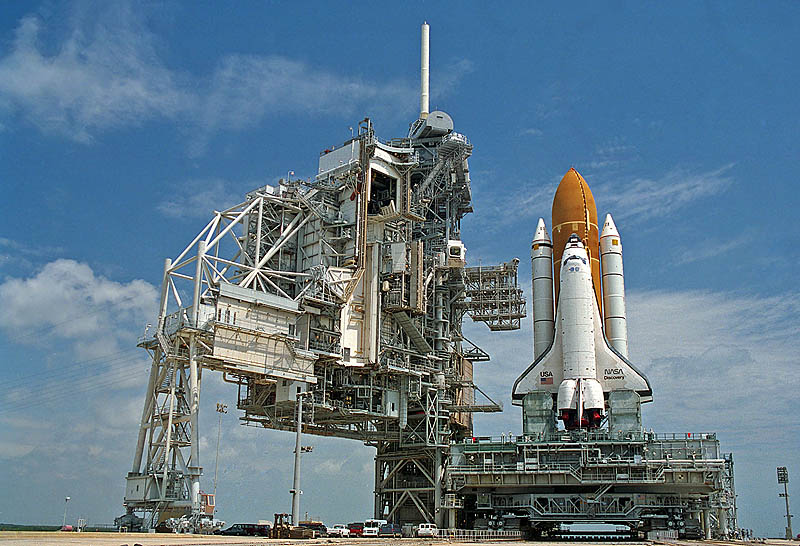
The space shuttle Discovery rolling towards it’s launch pad. This image is based on the NASA original, but cleaned up and enhanced for printing. 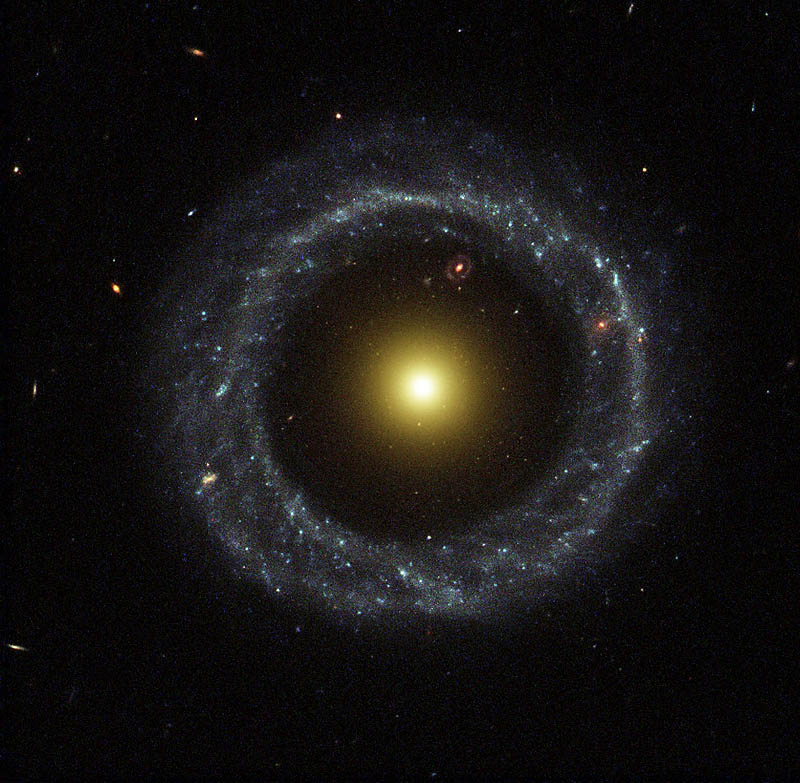
A Hubble image of Hoag’s Object… a rare ring galaxy 600 million light years away, with ancient ‘yellow’ stars in the nucleus and young ‘blue’ star in the ring. 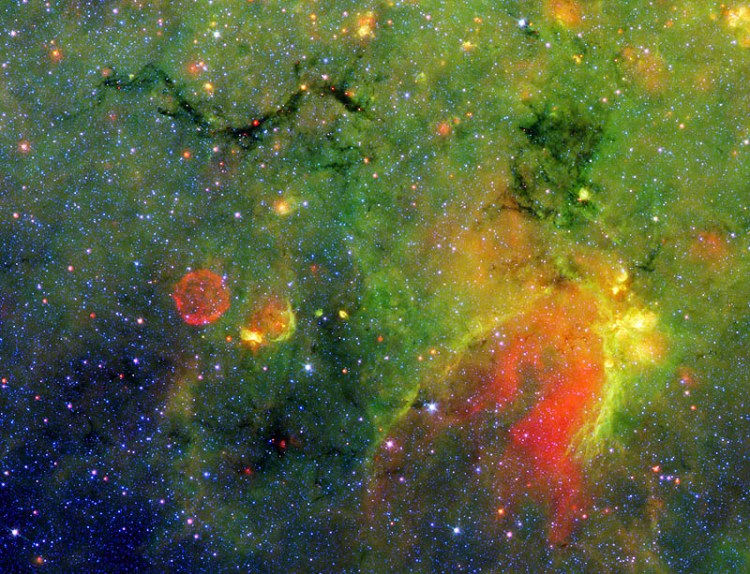
A Spitzer Space Telescope image of galactic snakes. 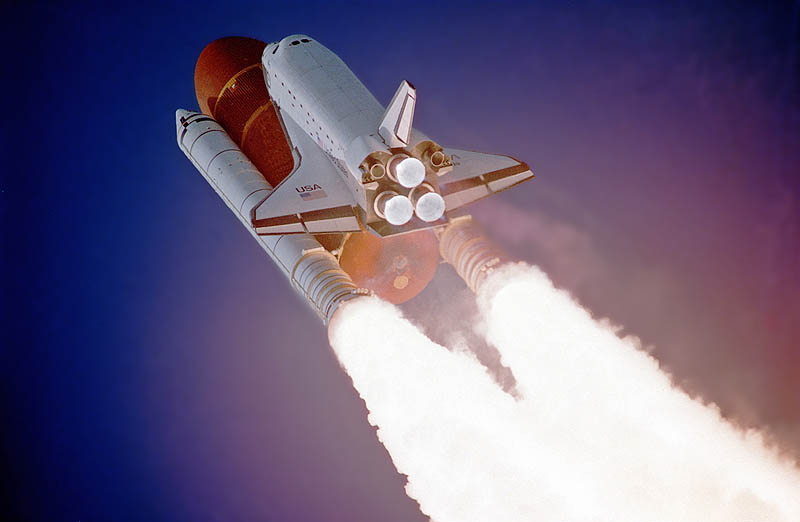
Launch of the space shuttle Atlantis 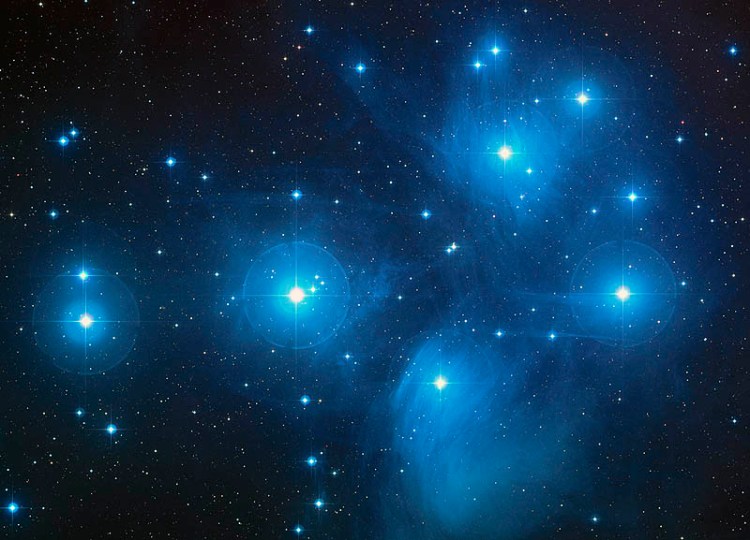
Hot blue stars of the Pleiades cluster. A color-composite image of the Pleiades from the Digitized Sky Survey 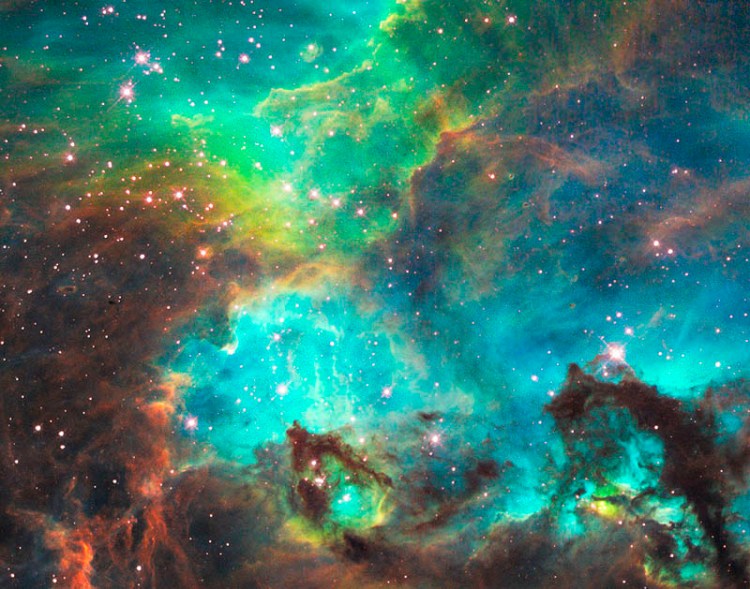
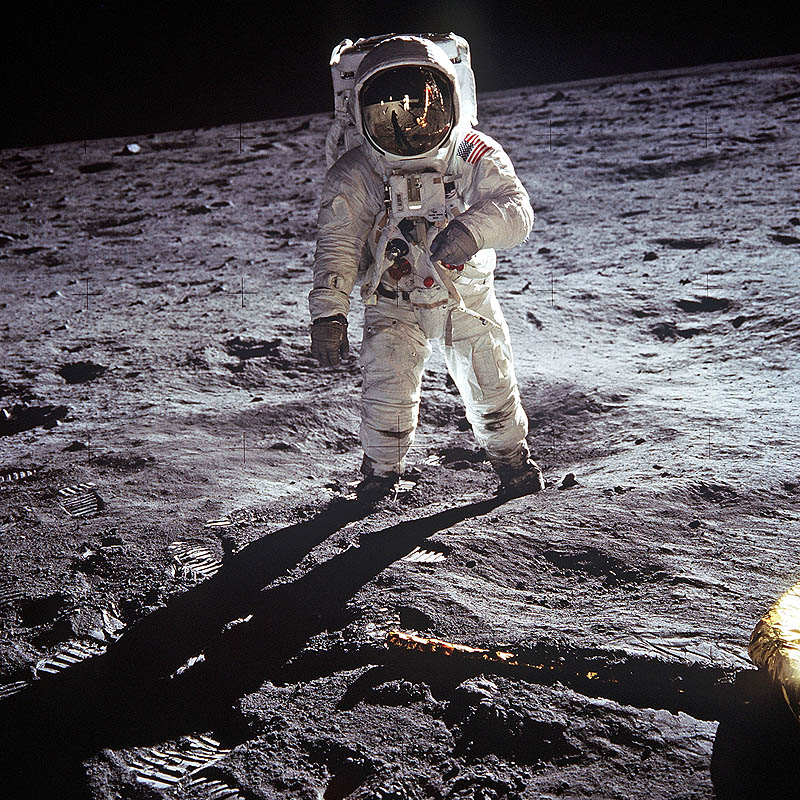
Buzz Aldrin stands on the Lunar surface during the Apollo 11 mission 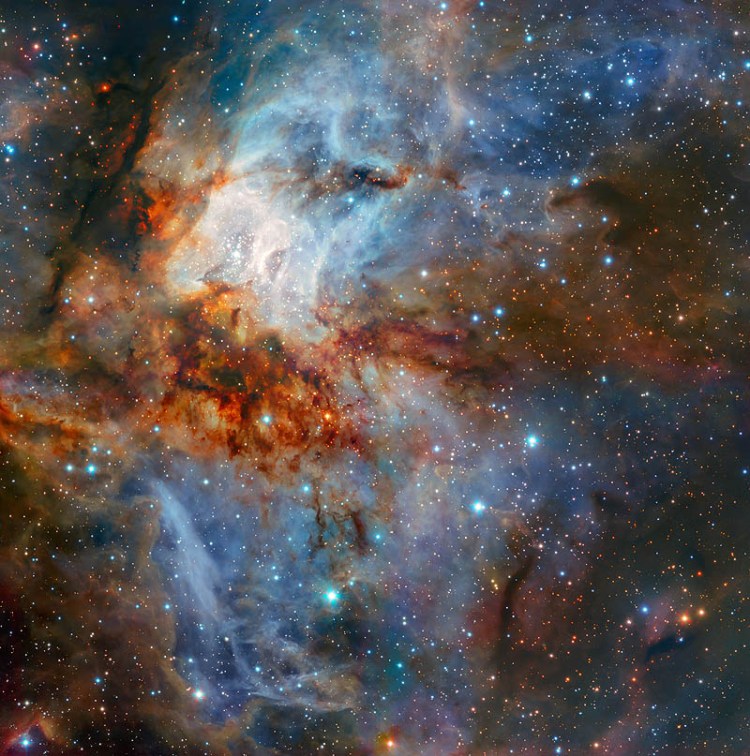
New observations with ESO’s Very Large Telescope show the star cluster RCW 38 in all its glory. This image was taken during testing of the HAWK-I camera with the GRAAL adaptive optics system. It shows the cluster and its surrounding clouds of brightly glowing gas in exquisite detail, with dark tendrils of dust threading through the bright core of this young gathering of stars. 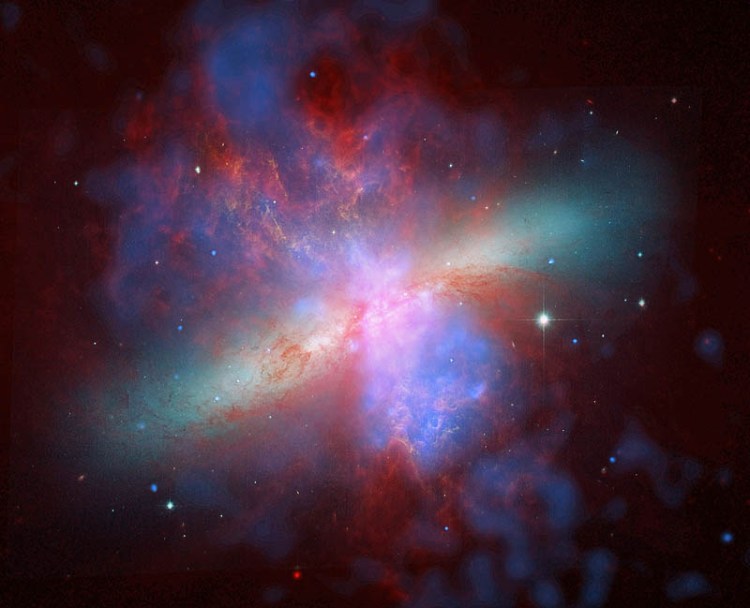
Composite image of the Starburst Galaxy – M82 (NGC 3034) Position (J2000): R.A. 09h 55m 52s Dec. +69° 40′ 49″ Constellation: Ursa 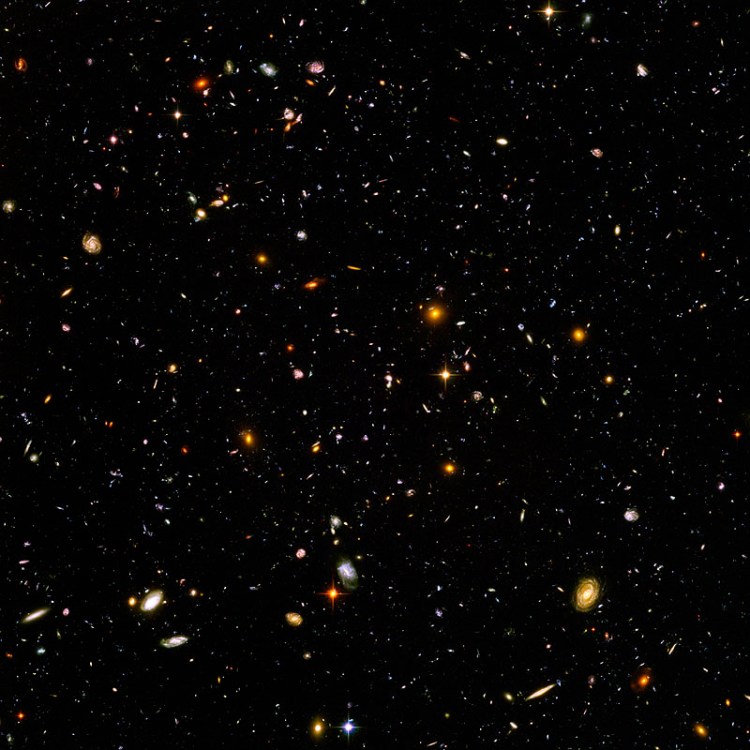
The Hubble Ultra Deep Field (HUDF) image. A small region of space in the Fornax constellation. The image is estimated to contain 10,000 galaxies. 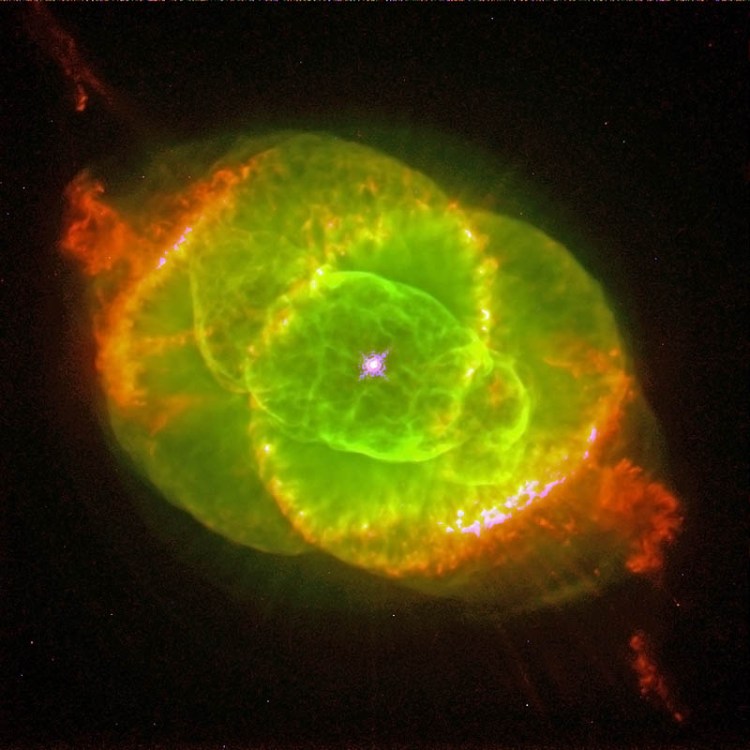
A Hubble image of the Cat’s Eye Nebula 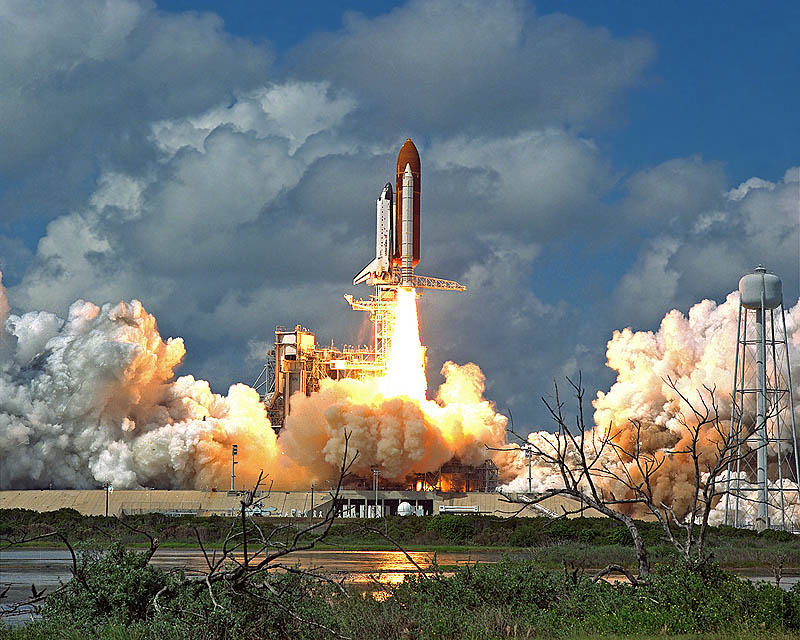
A return to flight launch for the Space Shuttle Discovery. This image is based on the NASA original, but cleaned up and enhanced for printing. 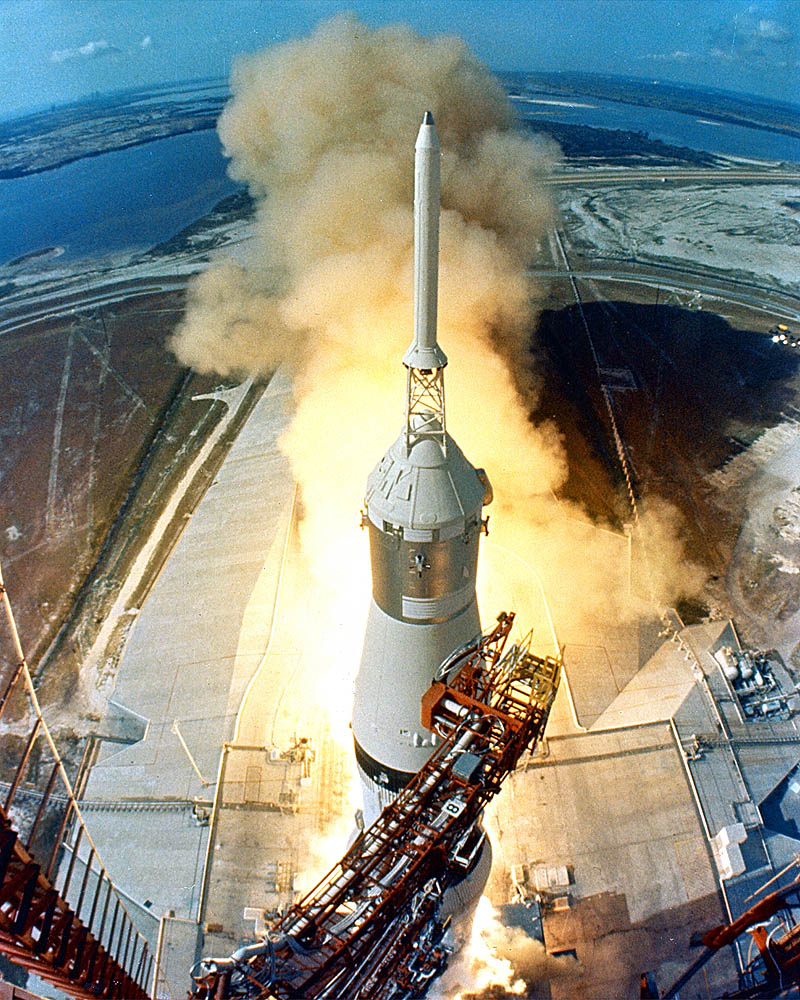
Apollo 11 lifts off from Kennedy Space Centre on July 16, 1969 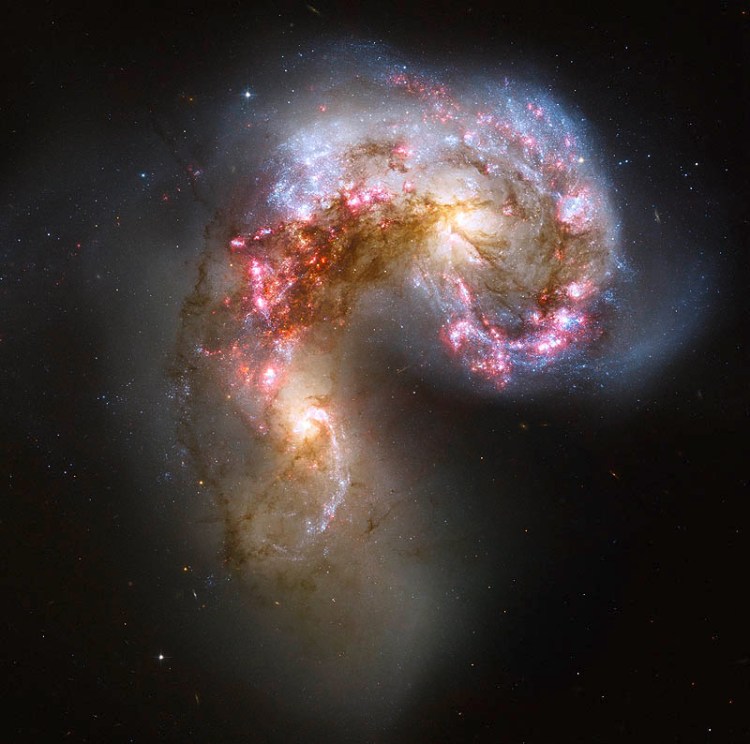
The Antennae Galaxies in the constellation Corvus. Image shows the two galaxies NGC 4038 and NGC 4039 in collision with each other 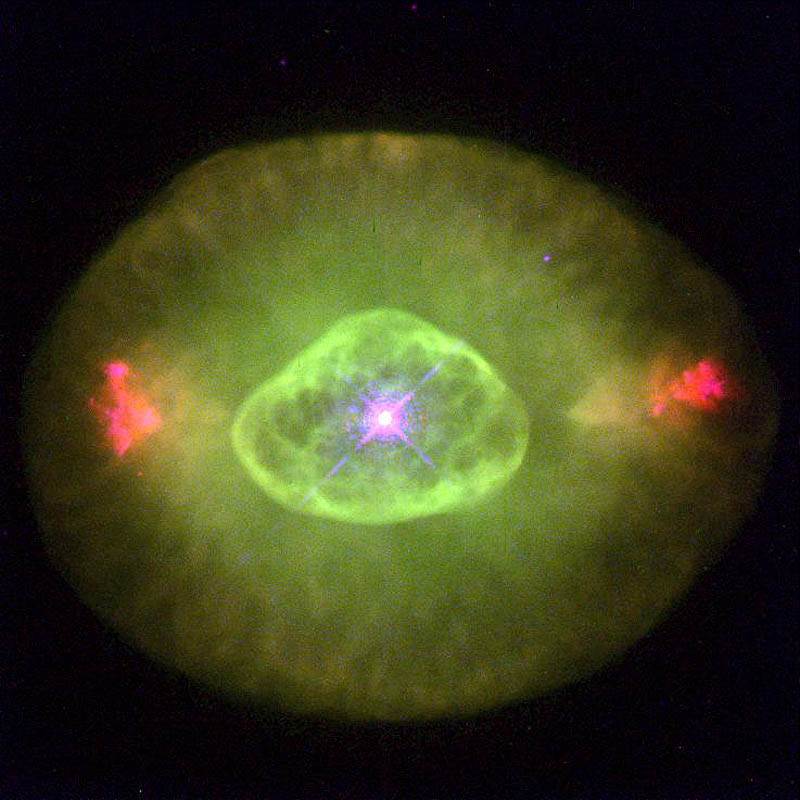
Planetary nebula NGC6826 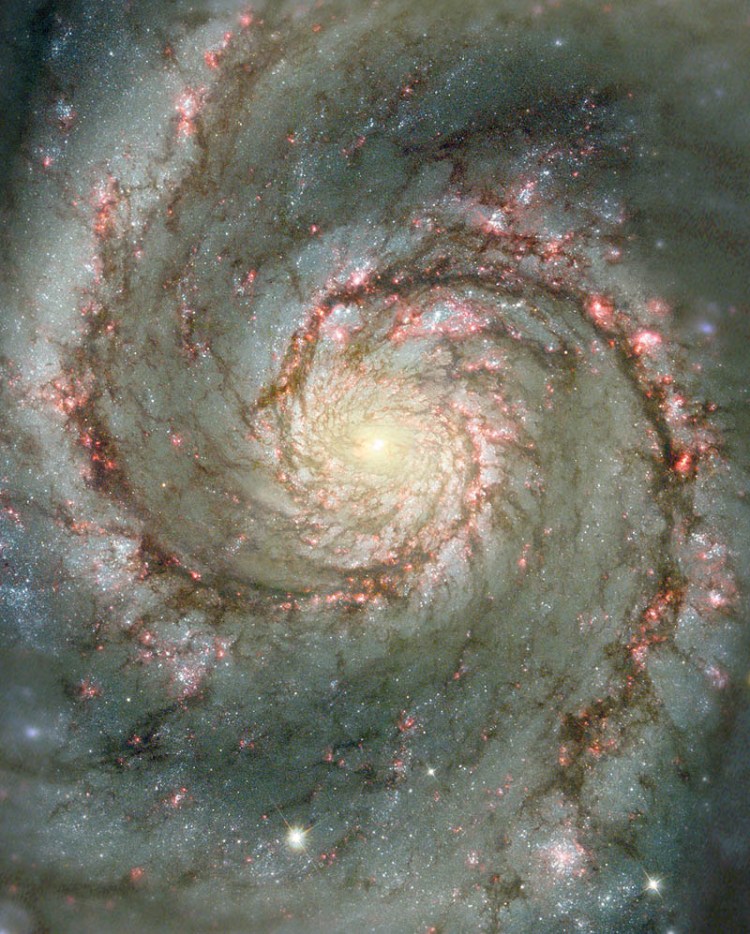
A Hubble image of the Whirlpool Galaxy M51. 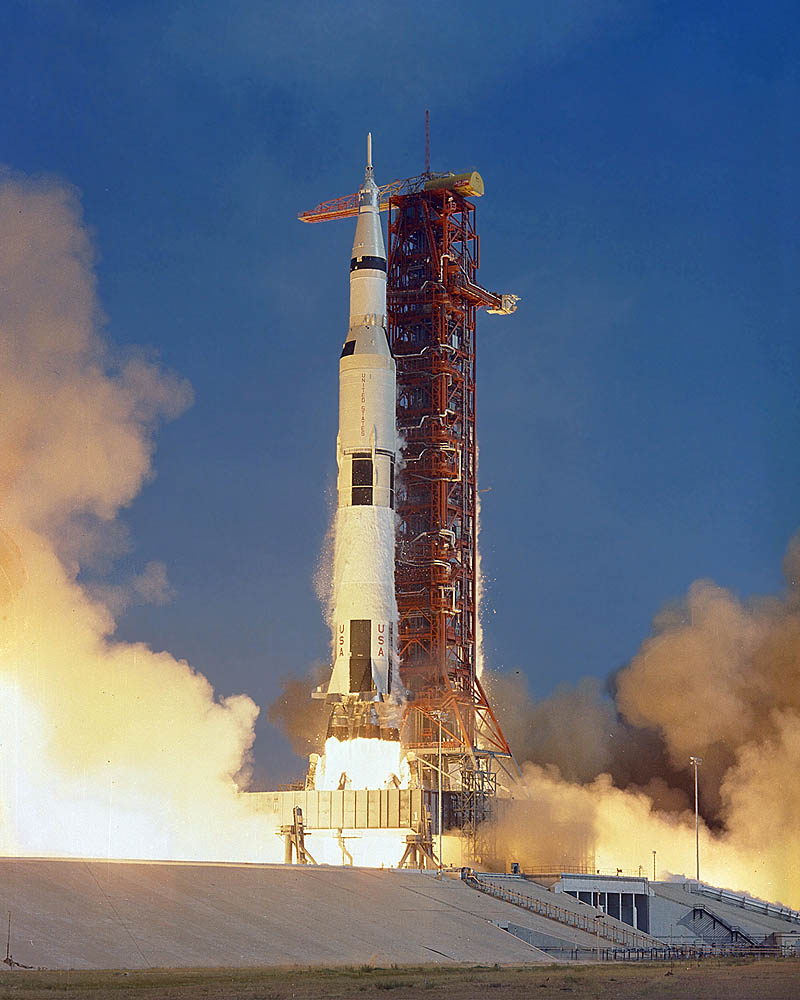
Apollo 11 lifts off from Kennedy Space Centre on July 16, 1969 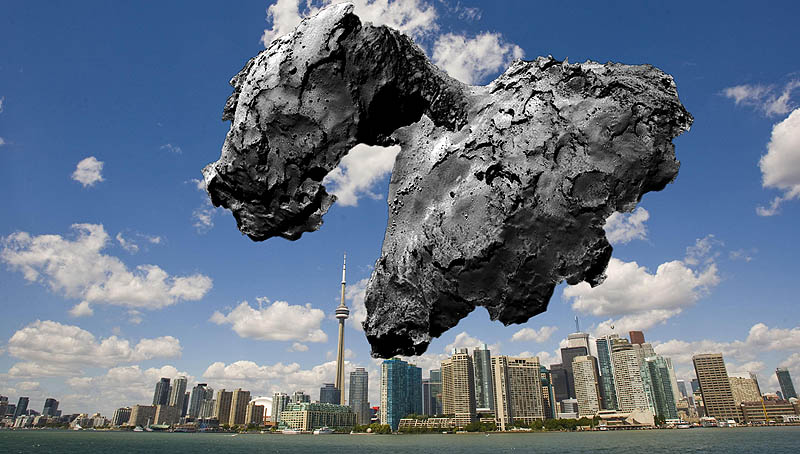
Comet 67P and Toronto skyline to scale

