My bands, instruments, influences, etc.
I’ve always enjoyed music as long as I can remember. And I’m from the generation that turned music on it’s head. Popular music was once the preserve of professional songwriters such as Leonard Bernstein, Cole Porter, George Gershwin and suit-wearing songsmiths from Tin-Pan Alley (London’s Denmark Street and New York’s 28th Street), writing their admittedly well-crafted songs for the likes of Frank Sinatra, Connie Francis, Alma Cogan, Dickie Valentine and Pat Boone. But from the mid-fifties, we suddenly had rock and roll with Elvis Presley, Bill Haley, Little Richard and Jerry Lee Lewis, and on our side of the water, Lonnie Donegan, Tommy Steele and Cliff Richard. This spawned a whole swathe of homespun vocal groups and skiffle bands. In my home town of Derby, in the early sixties when I was in my mid-teens, you were unusual if you weren’t talking amongst your friends about starting your own band.
Anyway, it wasn’t too surprising to find that the old guard were on their way out, giving way to the likes of Buddy Holly, The Drifters, Del Shannon, The Shadows, The Beatles, the Beach Boys, Roy Orbison, the Stones, The Animals, The Who, The Kinks, etc. They were the new kids on the block, and things would never be the same.
My major influences were pretty well the above crowd, plus emerging sounds like Pink Floyd, Jimi Hendrix, and the American west coast bands like The Doors, The Byrds and Jefferson Airplane.
I was always interested in electronics and my early exposure to these bands was listening to them on military surplus headphones plugged into home-made crystal sets, one valve short-wave radios, and onwards to home-made one and two transistor radios. It was a short step from there to start making electronic sound generators so I could (and did) regale the neighbourhood with very loud sci-fi type noises. And from there to building my first electronic keyboards. By this time, I was listening to a lot of keyboard orientated music from the likes of Pink Floyd, Deep Purple, The Nice, Yes and Tangerine Dream.
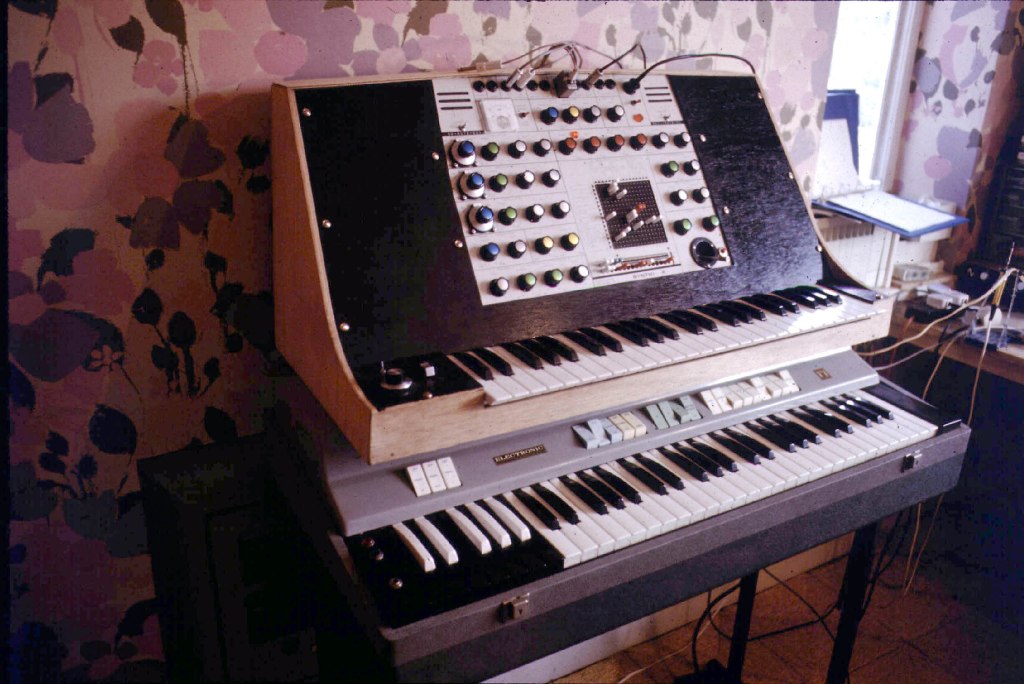
In 1975 I was put in touch with a techie at the Putney based EMS who made the VCS3s that Pink Floyd used extensively. Through him, I bought a synthesiser where someone had burned out the electronics.
Over the autumn/winter of 1975, I rebuilt the electronics, added a keyboard, stuck it in a box and it looked like this (the thing on top of the organ).
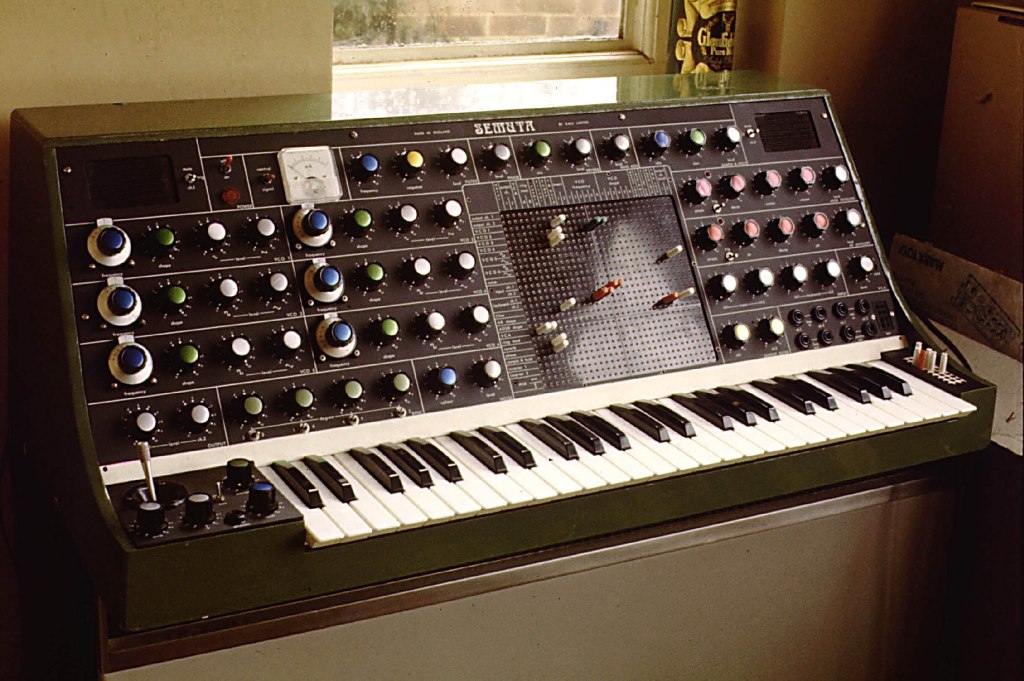
Not satisfied with that, and mercilessly exploiting my friendship with the EMS techie, I turned it into this, which was by now a serious piece of kit (see Anorak’s Department below).
All I needed now was a band, and then learn how to play! As it happens at this time, I was roadie-ing and mixing for a London-based college band belonging to an old childhood friend of mine. His name is Tony Doré, and the band was Tony, Caro and John.
Anyway despite the fact that T, C and J were sort of a psychedelic folk band, I suggested that my synth would be great for making the exploding bomb noises at the end of the Dambuster’s March, in case they ever decided to include this in their repertoire. It’s some measure of their approach to music that they did indeed decide to do a rendition of the Dambuster’s March, and so I was invited to join the band in a musical capacity.
But back to the synth… someone saw it and offered me £800 for it, which was a fortune at the time – a lot more than any car I’d owned, and so suddenly I could afford to buy the commercial synthesisors I’d always lusted after.
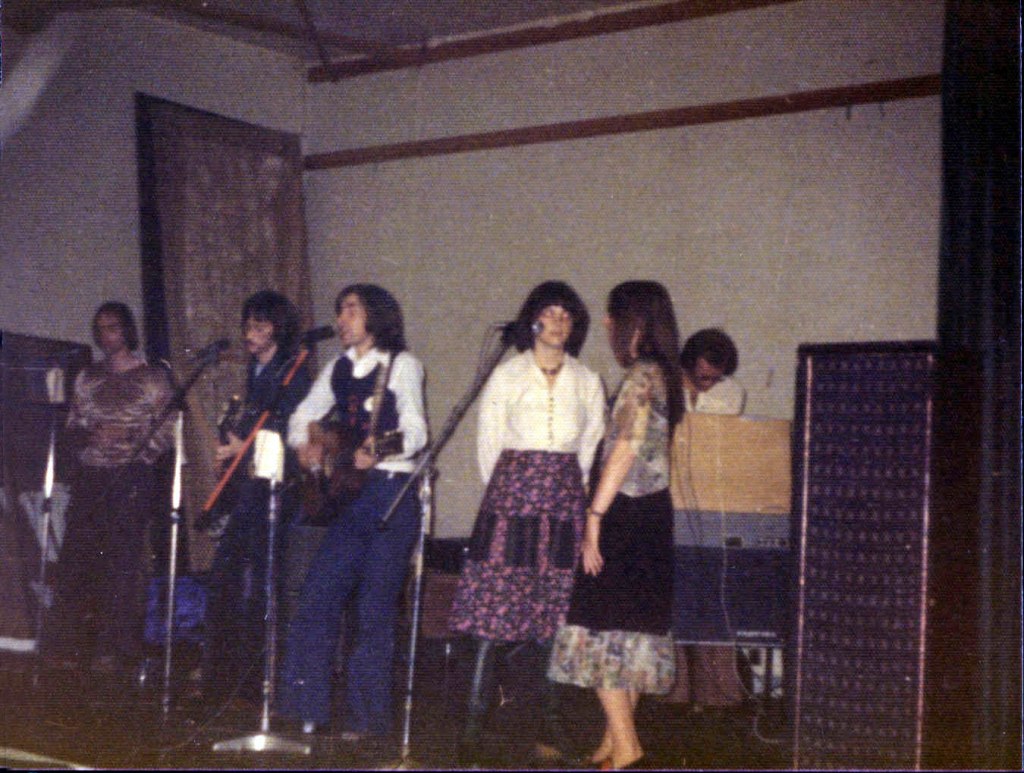
Tony, Caro and John (now a seven-piece band called Forever and Ever) continued until around 1978 and then careers intervened. Tony found himself in Scotland, Norway and Texas, I found myself in Minneapolis, Holland and California, and the band went into a bit of a hiatus.
Then we all found ourselves with families and other distractions, and it turned out that Forever and Ever‘s gigging days were over.
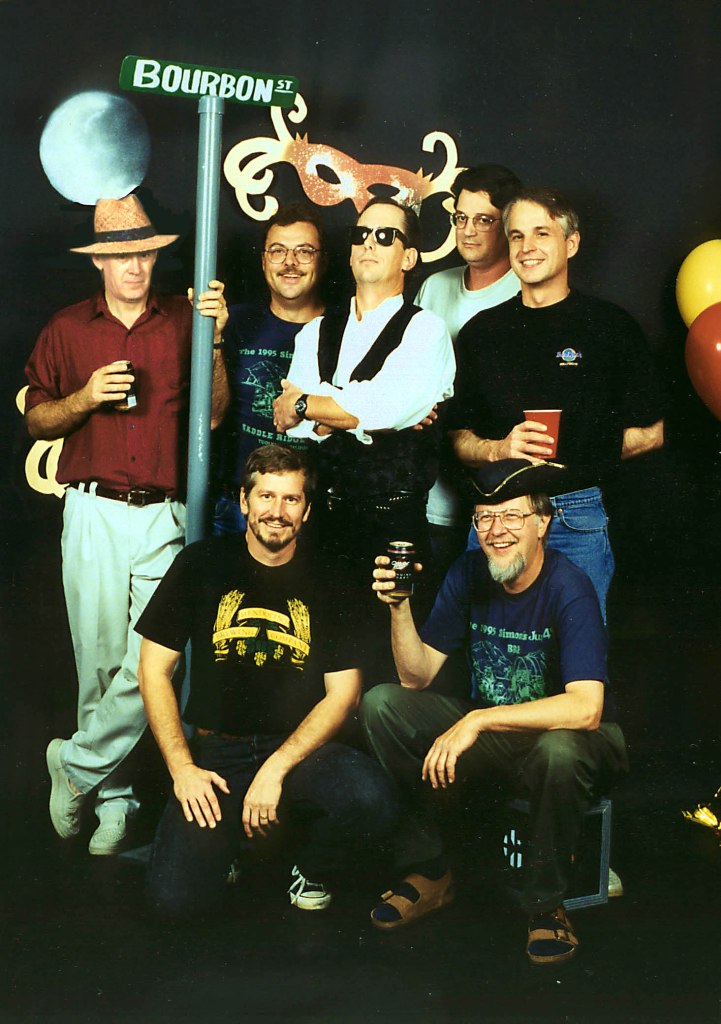
In the eighties I joined the short-lived Derby band Shuttered Room with my brother Rob and brother-in-law Mick. Then in 1995 and by now living in California, I joined a band called Borrowed Time.
Despite careers, families and geographical challenges, various permutations of the Forever and Ever lineup would continue to meet-up, perhaps four or five times a year for an evening’s jamming and general over-indulgence (as described in our eponymous track, “Ageing Hippies”), as we had been doing since around 1976. This was where our various musical leanings (Tony – folk, punk; John – jazz, rock; Simon – blues, R & B; Jonny – R & B, folk; me – electronics, rock) came together to generate some interesting creative tensions!
Sadly, we lost our friend and T, C and J bassist and producer, John Clark to cancer in 2005.
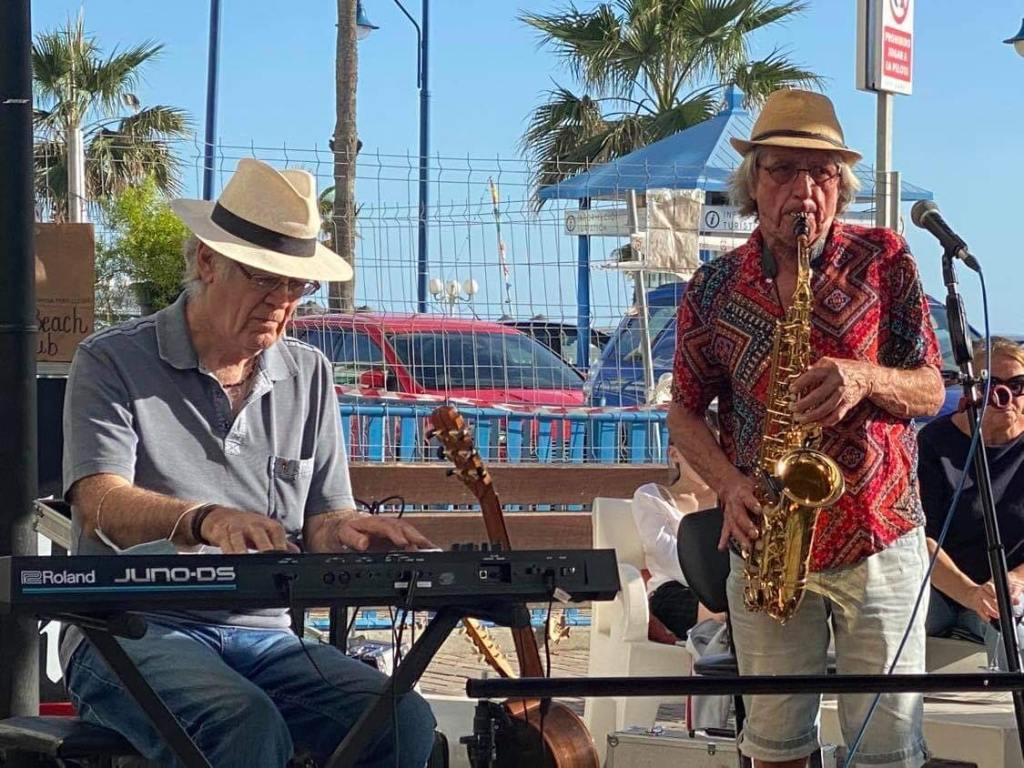
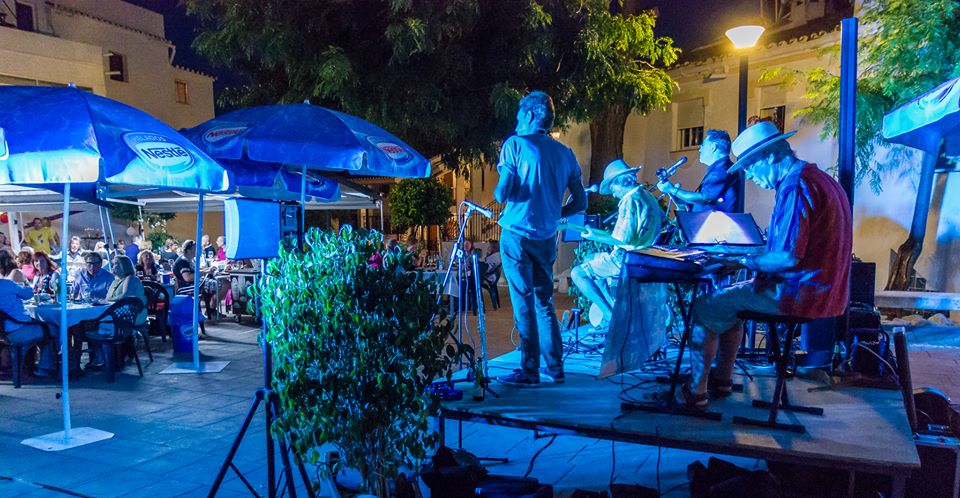
Currently, I’m retired and living in Spain and recently enjoyed a musical ‘Indian Summer’ with my collaborator, Mitch France. We played in local bars and restaurants, mostly outdoors, in the sunshine, and sometimes on the beach! We’ve had a succession of different line-up permutations each with different names, culminating in just Mitch and I under the name The Bandits.
Meanwhile, back in Blighty, Tony was still producing music, and was coming under pressure to perform a couple of gigs as T, C and J. These were pretty successful, and led to birthday celebrations in Ealing for both Tony and Caro, where the lineup was joined by the original Forever and Ever lineup including Jonny Owen (Caro’s brother) on blues harp, Simon Burrett on lead guitar, myself on keyboards and my son Adam on Bass.
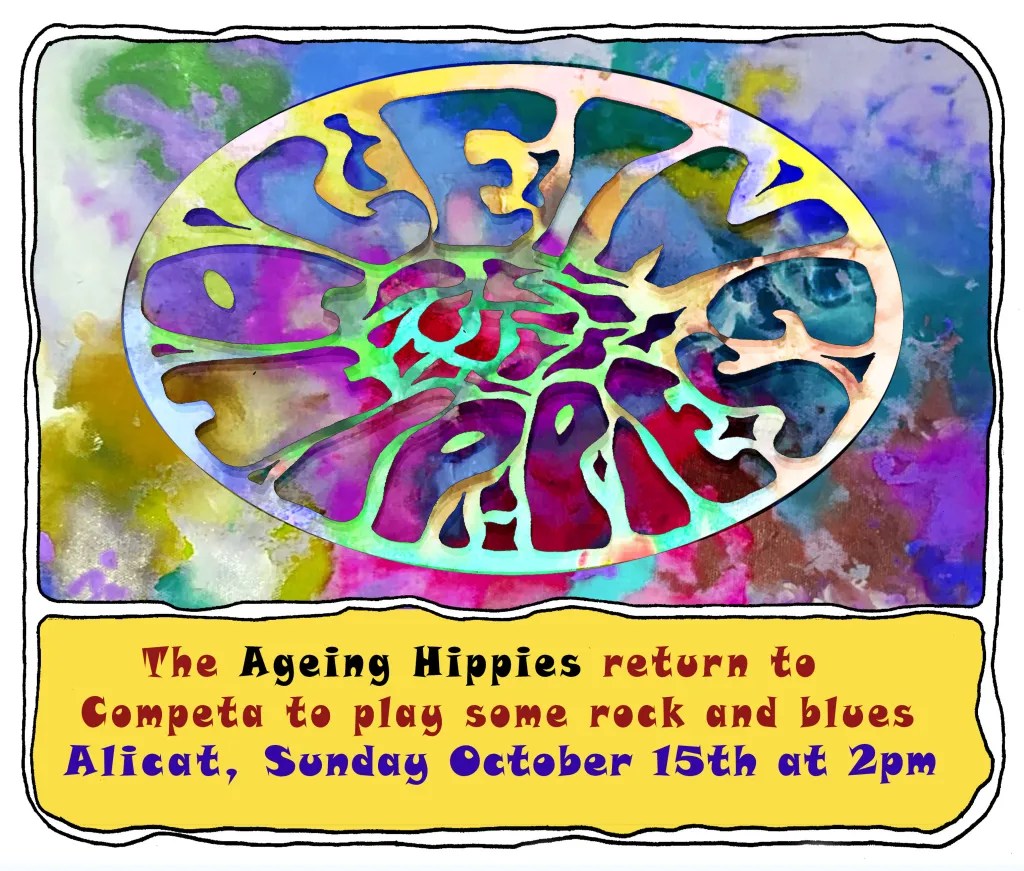
And then, in yet another incarnation called The Ageing Hippies, Tony, Simon, Adam, Simon’s son Alec and myself did several gigs in my local town of Competa in Spain.
Technology
My band synth is the excellent and versatile work-horse, the Roland Juno-DS, but my self-indulgent noodling synths are the amazing Yamaha MODX6…
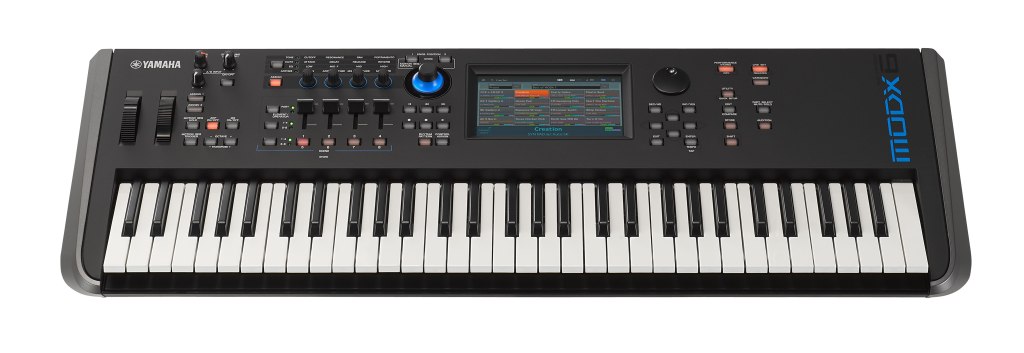
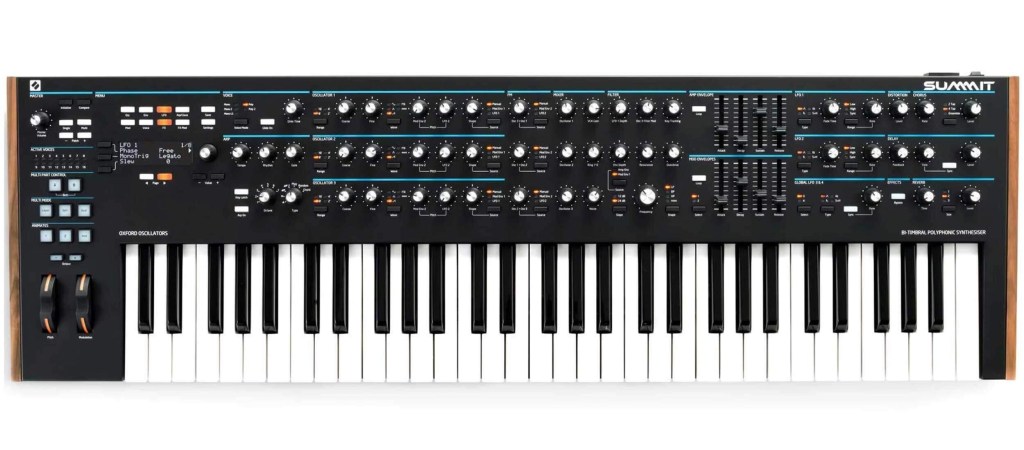
and the Novation Summit…
Anorak’s Department
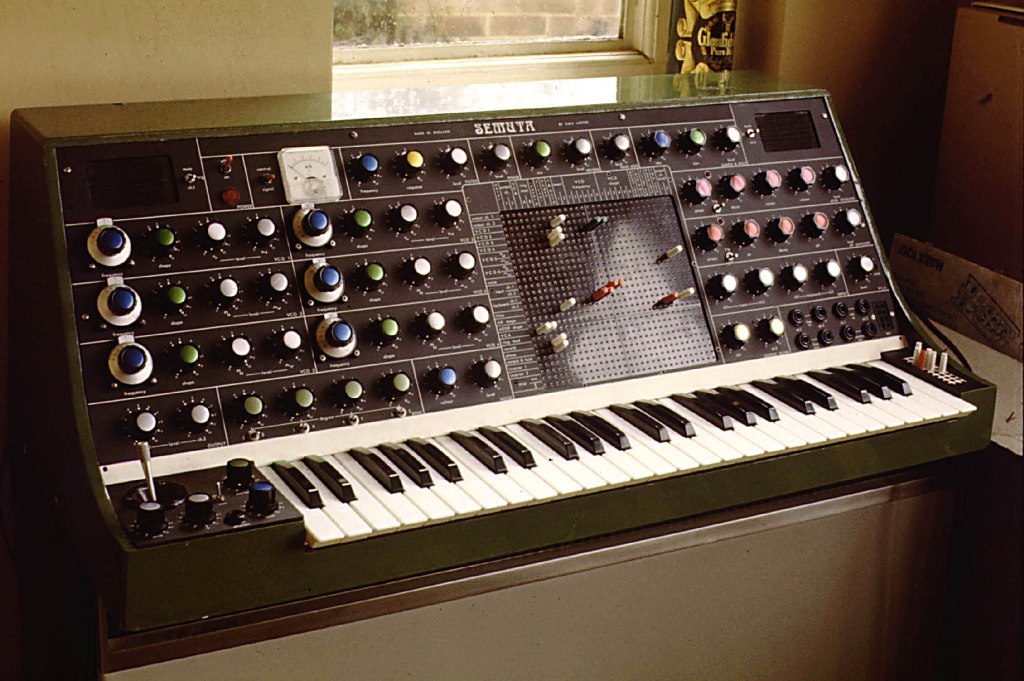
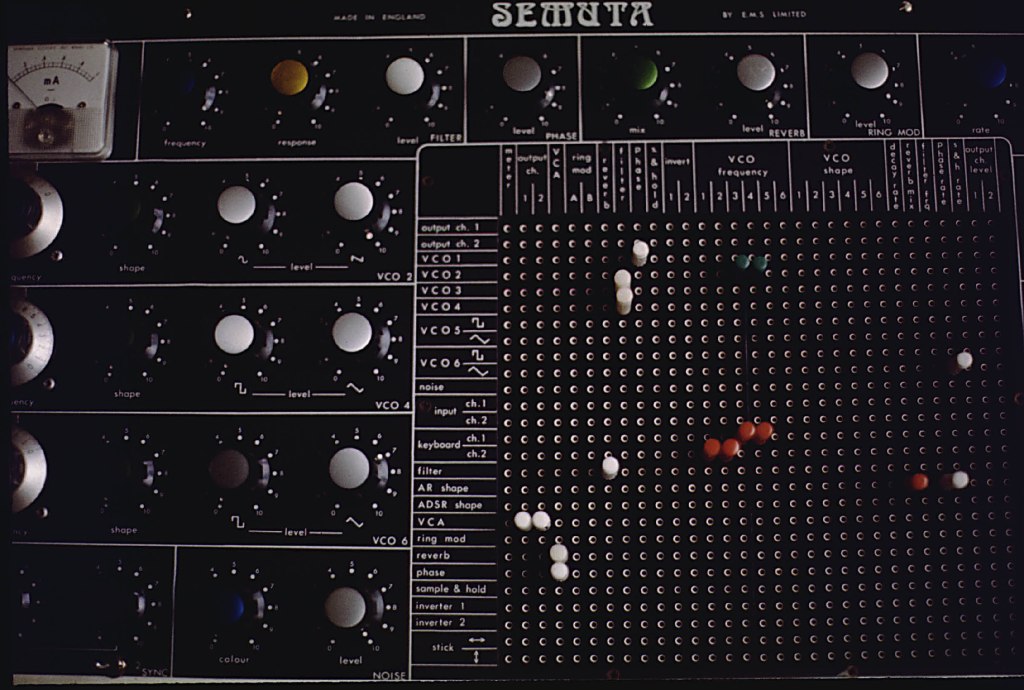
The synth referred to earlier was based on re-built EMS boards from a burned-out Synthi AKS, plus some heavy customising, ably assisted by a friend who was one of the top techies at EMS. The front panel was my design in heavy aluminium alloy, and the lettering was a labour of love, all done by hand using Letraset sheets. The instrument was primarily monophonic, but it had enhancements that allowed a duophonic mode… if you played a chord, you’d hear just the top and bottom notes.
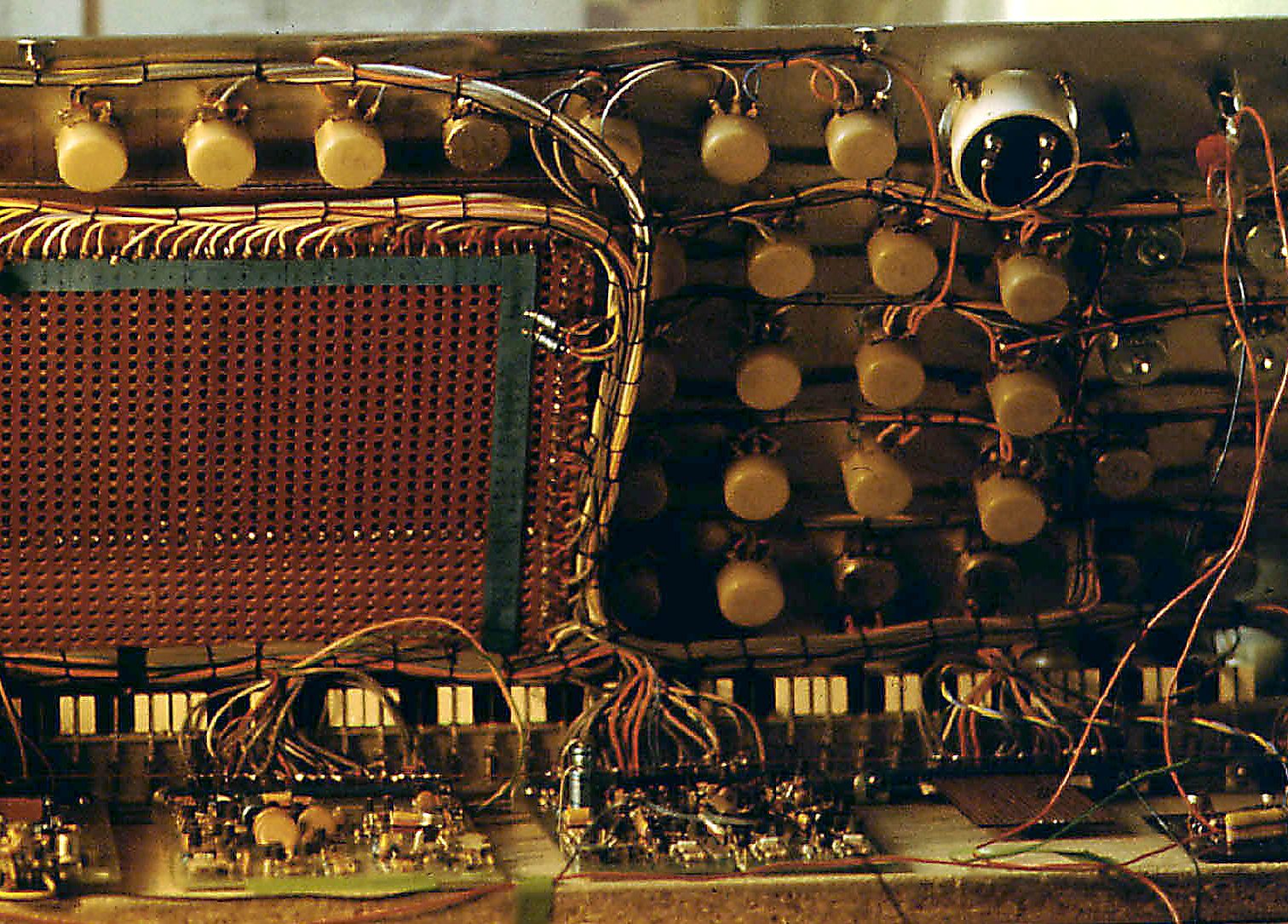
The finished instrument ended up with had a load of EMS enhancements to improve temperature stability. It had 6 VCOs (voltage controlled oscillators) with Vernier controls, a VCA, a 12dB/octave filter, a four octave keyboard, various forms of oscillator sync, a ring modulator, AR and ADSR envelope shapers, a noise generator, Sample and Hold generator and even an phaser from and ETI magazine project.
The extra modules required that I upgrade the Synthi‘s original 16×16 plug-board into the 27×31 custom built one seen above.
With 6 VCOs and oscillator sync, plus the wonderul EMS filter, the synth could make a sound like the end of the world! I christened it ‘Semuta’ after the narcotic music in Frank Herbert’s ‘Dune’. I sold it in moment of weakness to finance my first polyphonic instrument. I’d love to know where it is now…

